On-site services delivered to guest sites — propane top-offs, ice delivery, firewood, welcome packages — represent both a revenue opportunity and a guest convenience that increasingly distinguishes premium campgrounds from basic facilities. Managing these delivery services without technology means phone calls, paper order slips, and manual routing decisions that consume staff time and produce inconsistent service.
Technology-enabled service delivery management is making campground on-demand services more efficient and more profitable.
The Campground Delivery Services Opportunity
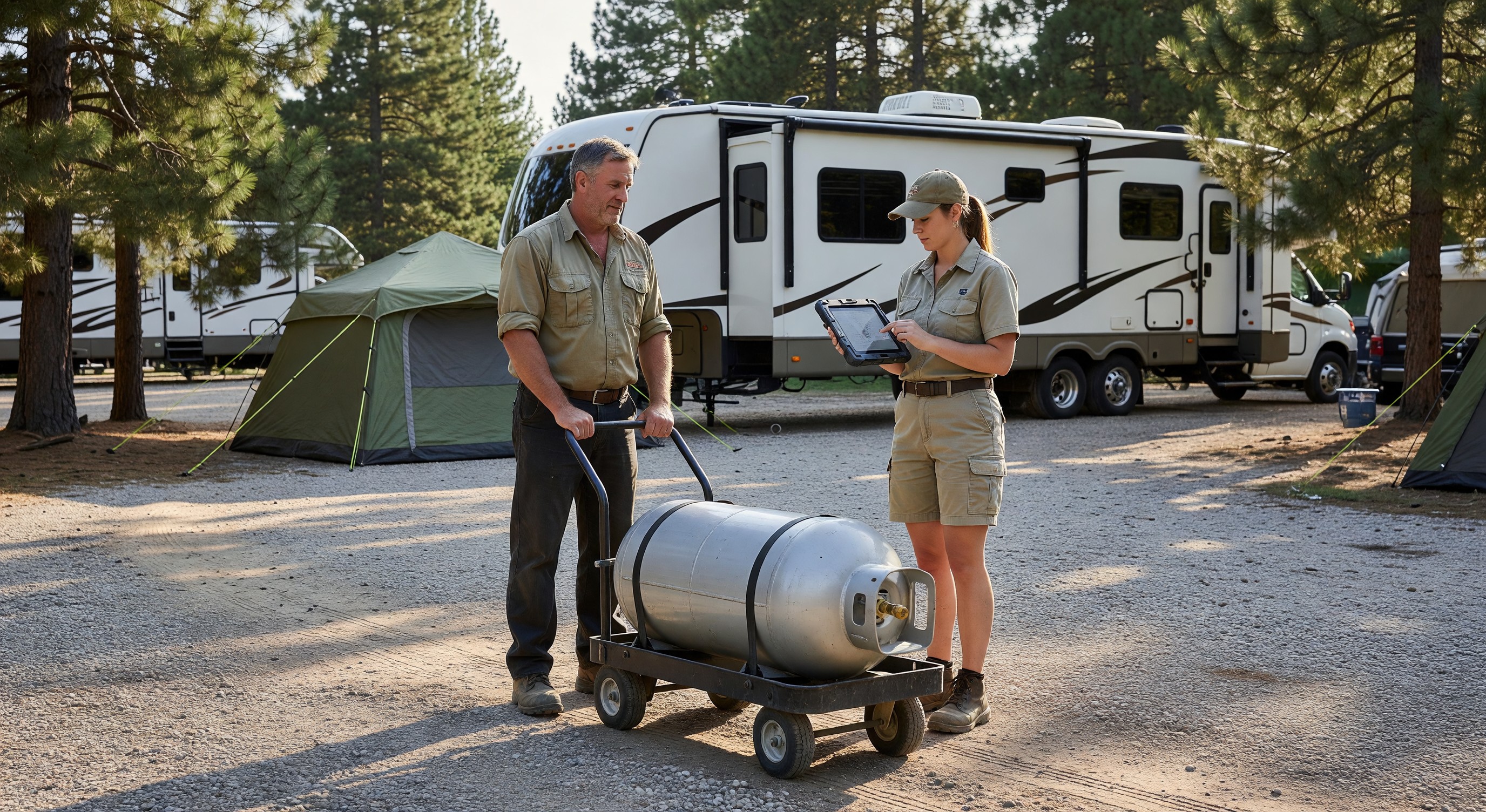
Propane: RV campers regularly need propane top-offs, particularly for extended stays. Offering on-site propane service — either a scheduled route or on-demand — eliminates the need for guests to unhitch and drive to a propane station. Premium pricing for the convenience is standard and accepted.
Firewood: Delivered to the site versus available for pickup at the camp store. Guests who order firewood delivery are willing to pay a premium for not having to carry heavy bundles across the campground.
Ice: Regular ice delivery route to sites during hot weather. Or an on-demand order for a bag of ice delivered to your site within 30 minutes. Both models work depending on your scale.
Welcome baskets: Premium glamping experiences increasingly include a welcome basket with local provisions, wine or beer, and amenity items. Delivery logistics management for these baskets needs to be trackable.
Grocery run service: Some larger resort campgrounds offer a concierge grocery service — guests submit an order, staff pick it up from a local grocery store, and deliver to the site. High service value, particularly for extended-stay guests.
Technology for Managing Delivery Services
Order management through the campground app or website: Guests select services and delivery windows through a digital interface — much more scalable than phone orders. The order appears in a staff-facing queue with site number, requested window, and items.
Route optimization for recurring deliveries: For services delivered on a regular schedule (daily firewood route, morning ice route), route optimization software sequences stops in the most efficient order. Google Maps’ multi-stop route optimization or dedicated delivery routing software can be used.
SMS confirmation and notification: When an order is confirmed, the guest receives an SMS with a delivery window. When the delivery is made, a completion confirmation message closes the loop. This prevents “I ordered and nothing happened” frustration.
Integration with inventory and billing: Orders should trigger inventory decrement (propane levels, firewood inventory, ice inventory) and billing charges to the guest reservation or camp store account. Manual order fulfillment without inventory and billing integration creates reconciliation problems.
Propane-Specific Technology
Propane delivery at campgrounds has some specific technology considerations:
Propane level monitoring: Tank-mounted wireless sensors that transmit propane level data allow anticipatory delivery scheduling — staff can see which RV tanks are approaching empty and offer delivery before guests request it.
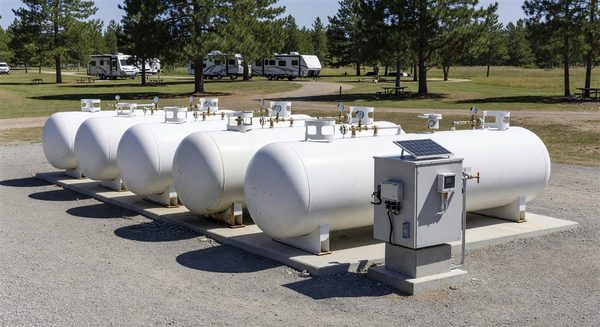
Propane metering for site service: For campgrounds that supply propane through a central system to site pedestals (like a central sewer or water system), wireless propane metering systems allow per-site billing based on actual consumption.
Safe delivery documentation: Propane delivery requires documentation of the delivery — quantity delivered, tank serial number, pressure check, and delivery staff sign-off. Digital forms on a tablet or phone ensure this documentation is captured and stored.
Frequently Asked Questions
What markup on delivery services is reasonable for campground guests? Delivery service markups of 25–50% over standard retail pricing are generally accepted when the service is genuinely convenient. Propane delivered to your site at $0.20/gallon over the price at a local station is reasonable; $1.00/gallon premium would generate complaints. Test pricing by watching refusal rates — too many “no thanks” responses indicate the premium is at the limit.
Should I offer delivery services at all hours? Define specific delivery windows rather than truly on-demand 24/7. A morning (8am–12pm) and afternoon (2pm–6pm) window for most services is manageable with standard staffing. Late-night propane delivery is operationally complex and rarely worth it.
How do I staff delivery services without adding headcount? The most common model is cross-training existing staff (camp hosts, maintenance) on delivery routes and scheduling delivery tasks during natural downtime in their primary responsibilities. Morning site check walks and firewood delivery routes are natural combinations. As volume grows, a dedicated delivery role may be justified.
Can I use electric golf carts or utility vehicles for campground delivery routes? Yes, and this is the most common delivery vehicle at campgrounds. Electric utility vehicles eliminate fuel cost for the route, are quiet (appropriate for early morning routes near sleeping guests), and have sufficient range for most campground footprints. Charging management for the vehicle fleet adds a small operational layer but is manageable.
Further Reading from Authoritative Sources
- ARVC campground ancillary services and propane safety guidance — ARVC provides guidance on ancillary revenue programs and safety requirements for campground services including propane handling, making it the most relevant trade authority for campground propane delivery service design.
- NFPA 58 liquefied petroleum gas code and propane safety standards — NFPA 58 (Liquefied Petroleum Gas Code) establishes the safety standards for propane storage, handling, and delivery operations that campground operators must comply with when providing propane services to guests.