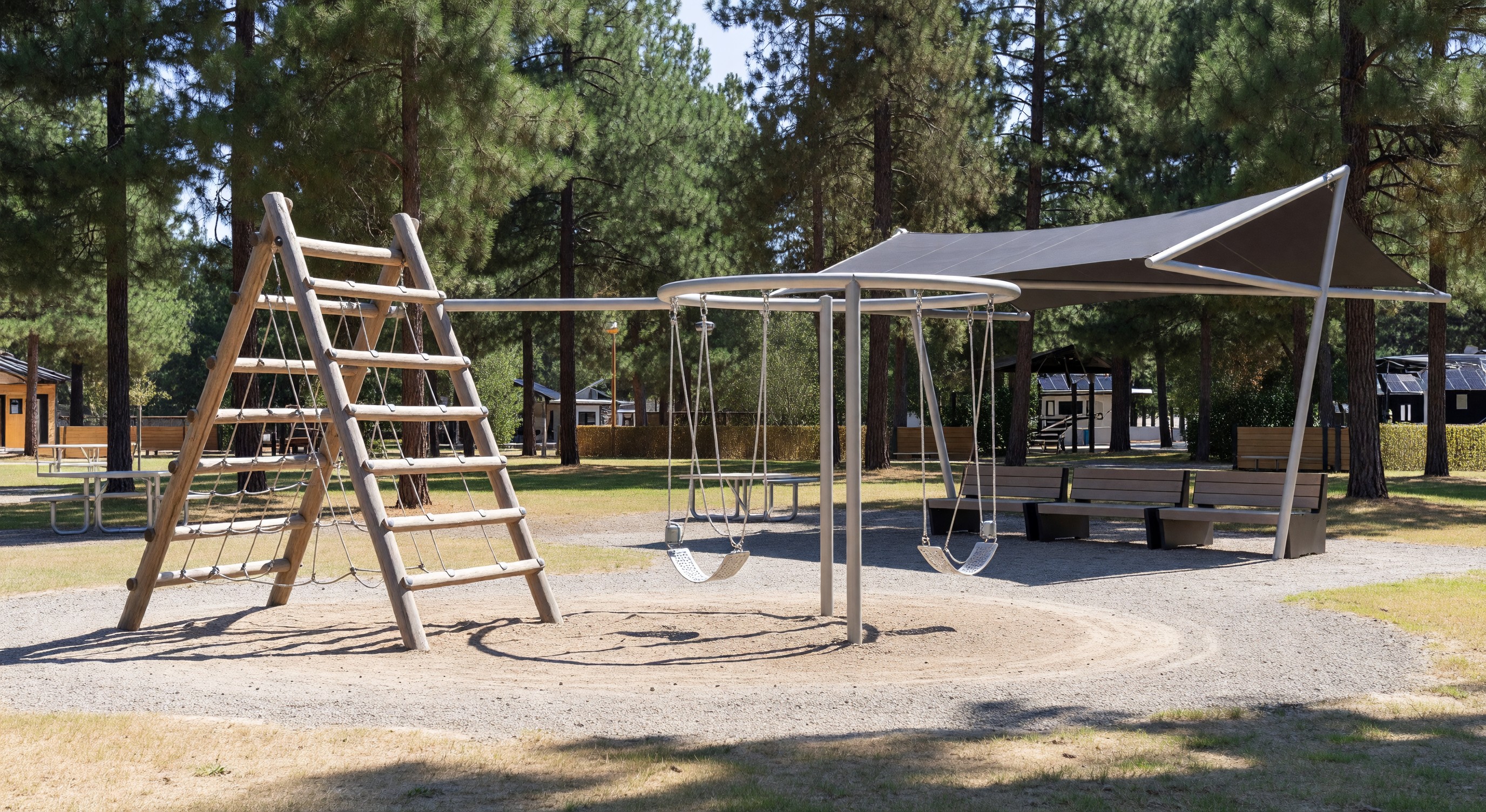
Campground common areas — playgrounds, pavilions, sports courts, dog parks, and recreation fields — require ongoing maintenance and generate significant guest usage. Technology applied to these spaces can reduce maintenance costs, improve safety, and create more engaging experiences.
Smart Playground Safety Monitoring
Traditional playground safety inspection is periodic — a staff member walks through each day and checks for obvious issues. Problems that develop between inspection rounds go undetected until a guest reports them.
Smart playground inspection tools: Digital checklists on mobile devices that guide staff through inspections point-by-point, time-stamping each check and logging photos of flagged issues. This isn’t technically sophisticated, but it’s more rigorous than a mental walkthrough and creates documentation.
Structural monitoring sensors: For established playgrounds, vibration and stress sensors can detect unusual loading patterns or structural anomalies that suggest damage. These are more common in public parks than campgrounds currently, but costs are declining.
UV monitoring: UV index monitoring at playground and pool areas, displayed on a small sign or app, helps parents make sun safety decisions. A simple UV sensor costs $50–$100; the data it provides is genuinely useful during peak summer days.
Pavilion and Covered Area Technology
Smart lighting in covered pavilions: Motion-activated LED lighting that turns on when guests approach and dims or turns off after a period of inactivity. Timer-based control for overnight periods.
Weather-triggered automation: Smart awnings and retractable covers that automatically retract when wind speed exceeds safe limits protect equipment and reduce maintenance calls from damaged covers.
Audio systems: Weatherproofed outdoor speaker systems that can play ambient music in common areas, deliver announcements, or support programmed events like movie nights and campfire presentations.
Power outlet availability: Covered pavilions with accessible power outlets are increasingly valued by guests — a charging station for phones, laptops, and camera batteries is a simple amenity that guests use constantly.
Sports Court and Recreation Field Technology
Court lighting with smart controls: Motion-activated or app-controllable LED court lighting that turns on for the guest’s scheduled reservation time and automatically shuts off at quiet hours.
Court reservation systems: Simple online booking (through your app or a web link) for pickleball courts, tennis courts, or other reservable facilities. Prevents queuing conflicts and provides data on court utilization.
Electronic scorekeeping displays: LED scoreboards for sports courts create a tournament atmosphere for competitive guests and are a feature that guests mention positively in reviews.
Dog Park Technology
Dog parks are a high-value amenity for the growing segment of pet-traveling campers. Technology serves dog parks in specific ways:
Foot rinse station with auto-shutoff: A simple wash station at the dog park exit with a sensor-triggered shutoff prevents the station from running continuously when not in use.
Waste station smart monitoring: Bag and waste bin monitoring systems that alert staff when supplies need replenishment prevent the frustrating experience of a guest arriving at an empty waste station.
Dog park access control: An RFID-gated dog park (registered pets only, requiring current vaccination records on file) adds a layer of safety assurance. This is more common at premium resort campgrounds.
Frequently Asked Questions
Is a playground a worthwhile investment for a campground that primarily serves adult RVers? A playground is specifically valuable for parks that want to attract family campers. For parks where adults-only or primarily adult campers are the target demographic, the investment may not serve your audience. Know your guest mix before investing in amenities that serve segments you’re not targeting.
How do I balance technology investment in common areas against more urgent operational needs? Common area amenity technology is generally a quality-of-life and marketing investment, not an operational necessity. Address infrastructure needs (water, electrical, road conditions) first; invest in common area enhancements when core infrastructure is solid.
What maintenance is required for outdoor technology in common areas? Outdoor electronics require more maintenance than indoor equivalents — weather protection, UV degradation, and physical use take a toll. Plan for annual inspection, cleaning, and replacement of failed components. Weather-rated equipment (IP65+) extends service life but doesn’t eliminate it.
Should I install security cameras in playground areas? This is a careful judgment call. Cameras near children require strict privacy policy adherence and careful communication with parents. The security benefit (deterring or documenting incidents in the playground area) must be weighed against parent concerns about surveillance of their children. Position cameras to cover the general area rather than individual children, post visible notice, and document your policy.
Further Reading from Authoritative Sources
- CPSC playground safety guidelines and fall zone standards — The Consumer Product Safety Commission publishes the Handbook for Public Playground Safety (Publication 325) which defines the inspection standards and fall zone requirements that campground playground safety programs must address.
- Access Board outdoor developed area accessibility standards — The U.S.