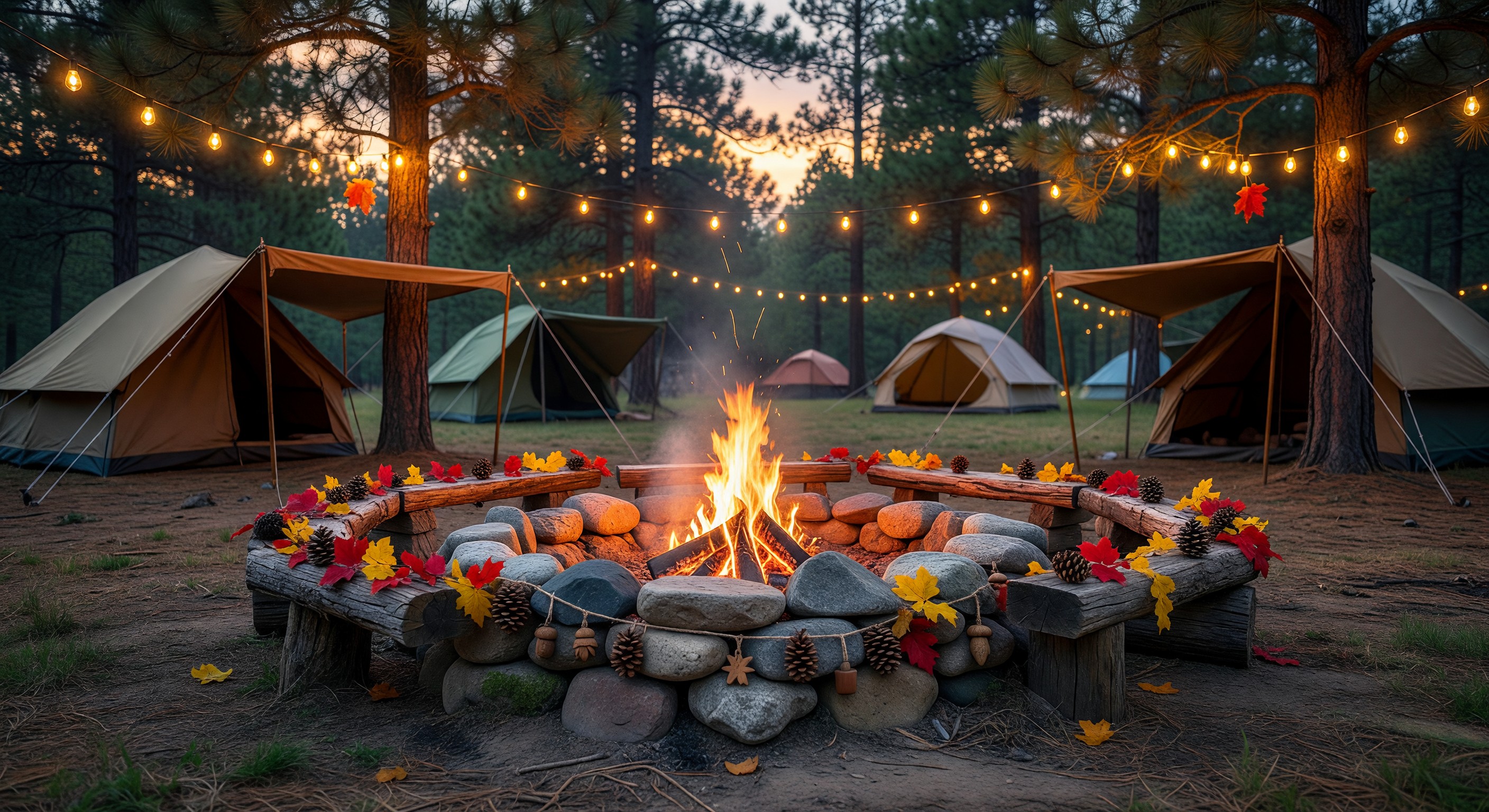
Every guest who posts a photo of your campground on Instagram, TikTok, or Facebook is creating a marketing impression that no advertising budget can fully replicate. Authentic, organic content from real guests carries credibility that paid ads don’t. And outdoor experiences are inherently photogenic — a beautiful campsite at golden hour, a campfire with silhouetted friends, a morning kayak on glass-still water.
Intentional campground design and guest experience strategy can dramatically increase the volume and quality of user-generated content (UGC) from your guests — and creating systems to capture and share that content amplifies its marketing value.
Designing Photo-Worthy Moments
The most-photographed campground moments are typically:
The site itself: A beautiful site with a privacy hedge, a fire ring with well-stacked firewood, string lights overhead, and a thoughtfully arranged welcome setup photographs beautifully. Premium sites designed for aesthetics, not just function, generate premium UGC.
The fire: Campfires are among the most-photographed camping experiences. Good firewood (the right size for a photogenic fire), fire-starting aids included with the welcome kit, and a well-designed fire ring contribute to the “perfect campfire” moment.
The view: Sites with lake views, mountain views, or exceptional tree settings photograph better than interior loop sites. Positioning premium-priced inventory in view-optimized locations maximizes both rate premium and UGC quality.
Unique accommodations: Treehouses, domes, vintage Airstreams, and canvas safari tents are inherently photogenic. The uniqueness of the accommodation is itself a social media driver.
Signage and design details: Well-designed signage — hand-painted wood entrance signs, illustrated trail maps, vintage-style property markers — photographs well and communicates attention to detail that guests share as a reflection of the park’s character.
Creating a Signature Photo Moment
Many successful campgrounds have created a specific “signature” photo moment that guests seek out:
A photogenic swing overlooking a lake. A specific viewpoint with a framed mountain view. A “golden hour” spot that’s famous among returning guests. A themed installation (a giant Adirondack chair, a vintage camper with a flower garden) that’s become associated with the property.
These signature moments require investment to create but generate ongoing organic marketing as guests photograph and share them.
Building a UGC Capture System
Once guests are creating content, you need a system to collect and amplify it:
Branded hashtag: A unique hashtag for your campground (#CedarLakeCamp, #[YourParkName]). Promote it at check-in, in your pre-arrival email, and on site signage. Monitor the hashtag daily and like/comment on posts using it.
Guest photo share request: In your post-checkout email, ask guests to share their favorite photo from their stay. Include a direct link to your social media profiles or a simple form where they can upload images.
Review platform photo prompts: Google and TripAdvisor both accept photos alongside reviews. Prompt guests to include photos when requesting reviews — these photo reviews are more engaging and more visible than text-only reviews.
UGC gallery on your website: A rotating gallery of guest photos on your website booking page is social proof that requires no professional photography budget. It also shows guests the photogenic potential of your park before they book.
Permission best practice: When you share guest photos on your social channels, always credit the original creator and obtain their permission (a comment reply granting permission is sufficient for most purposes).
Social Media Content Strategy for Campgrounds
Beyond guest content, your own social media presence matters:
Instagram and Facebook are the primary platforms for campground marketing — visual, geographically targeted, and used by the demographic that takes family camping trips.
Posting frequency that’s sustainable: 3–5 times per week on Instagram, 4–7 times per week on Facebook, is a reasonable cadence for an actively maintained campground social presence. Daily posting that requires significant effort quickly burns out whoever is doing it.
Content mix: Behind-the-scenes (staff preparing for a new season, site improvements), seasonal highlights, guest spotlights, local area features (nearby hiking, fishing reports, local events), and direct promotional content (availability for upcoming weekends). A 70/30 mix of non-promotional/promotional is appropriate.
Frequently Asked Questions
Should I invest in professional photography for my campground? A one-time professional photo session that captures hero images of your best sites, amenities, and views is a worthwhile investment that pays back in better booking conversion for years. Ongoing social media content can rely heavily on guest UGC and staff phone photography — professional photography for every post is unnecessary.
How do I handle a guest who posts a negative photo or unflattering content? You can’t prevent it. Don’t engage combatively with negative social content. If a guest posts a photo illustrating a genuine problem (a trash can that wasn’t emptied, a broken facility), acknowledge the issue and describe what’s being done. Most reasonable onlookers can distinguish between a guest with a legitimate complaint and one who is simply difficult.
What photo-taking equipment should campground staff have? A reasonably recent iPhone or Android phone captures excellent campground content. Staff don’t need professional cameras for social media use. What matters more is composition instinct (the golden hour shot, the well-framed fire photo) than equipment. Consider providing staff with brief photography training focused on campground-specific content.
Is TikTok worth investing in for campground marketing? TikTok is effective for reaching younger campers (18–34 demographic) and for viral discovery content. If your guest base skews younger, it’s worth experimenting. Campground tours, “day in the life” content, and seasonal highlights perform well on TikTok when they feel authentic rather than produced. The editing commitment is higher than static photo platforms.
Further Reading from Authoritative Sources
- Go RVing consumer research on camping inspiration and social media — Go RVing publishes research on how RV travelers discover destinations and make booking decisions, including the role of social media and peer-generated content in the inspiration phase.
- ARVC campground marketing standards and digital strategy resources — ARVC’s marketing resources and educational programming cover digital marketing strategy for campground operators, including social media best practices tailored to the outdoor hospitality audience.