Outdoor recreation is a primary reason guests choose campgrounds over hotels. The opportunity to paddle a lake, hike a trail, fish a stream, or ride trails from the property is a core value proposition for parks in natural settings. Technology is making these recreation offerings easier to manage, more accessible to guests, and more profitable.
Here’s a look at the recreation technology that campground operators are deploying effectively.
Equipment Rental Management
Equipment rental — kayaks, paddleboards, bikes, golf carts, fishing equipment, camping gear — is a significant ancillary revenue opportunity. Managing it without technology creates problems: equipment not returned, maintenance not tracked, inventory not visible at booking.
Rental management software: Dedicated equipment rental platforms (some campground PMS systems include rental modules; standalone tools also exist) track inventory, manage reservations, process payments, and send automated return reminders. The core functionality:
- Inventory tracking by unit (Kayak #3 is currently rented to Site 47, due back at 4pm)
- Online pre-booking at time of campsite reservation
- Damage deposit collection and release
- Return tracking and late fee processing
- Maintenance flagging (Kayak #3 has a scratch — remove from rental rotation until repaired)
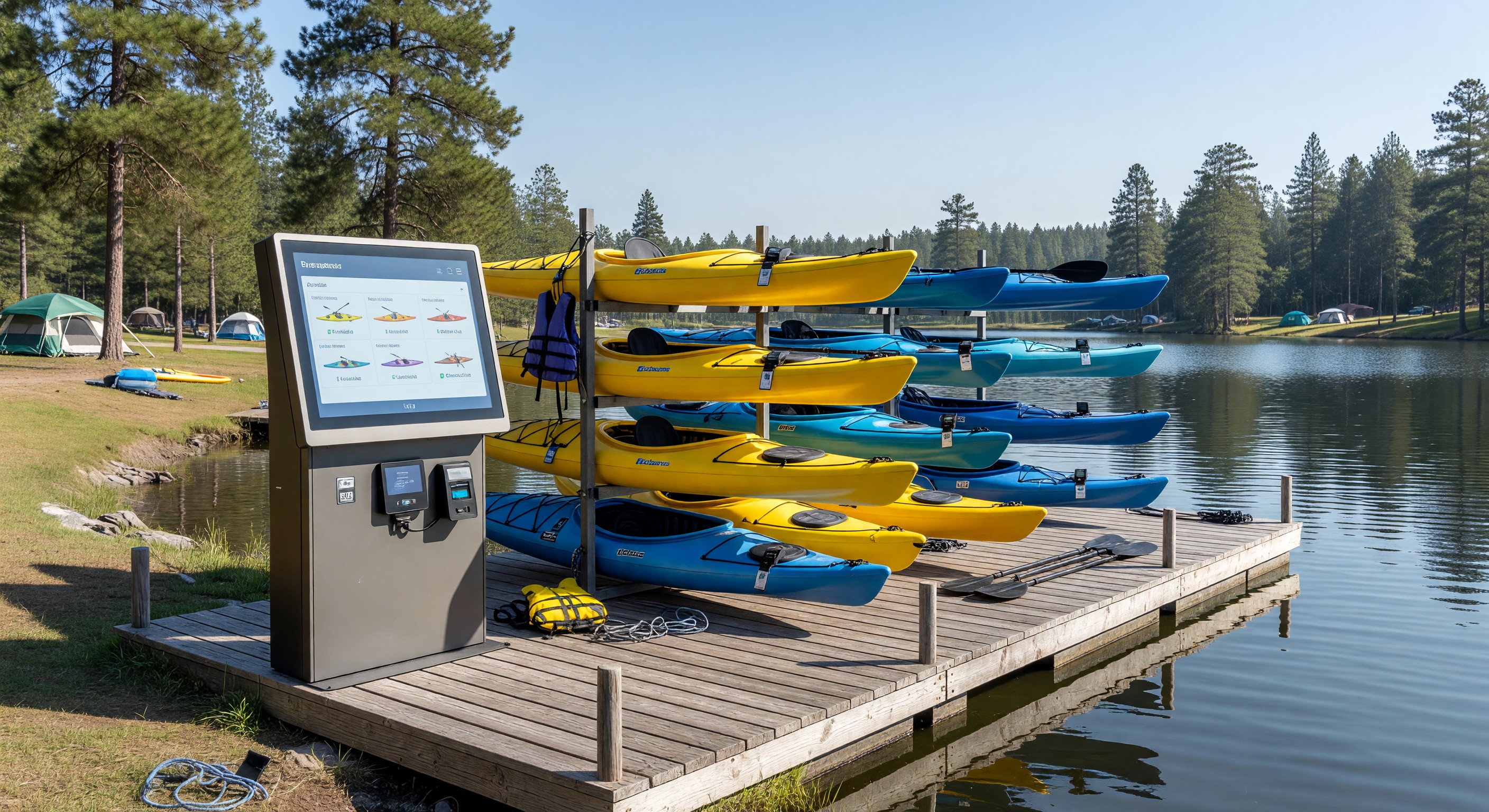
Self-service rental kiosks: Some parks with high rental volume install self-service kiosks where guests can check out and return equipment without staff interaction. These work well for standardized equipment (life jackets, kayak paddles) but less well for equipment that requires physical inspection.
RFID equipment tracking: Attaching RFID tags to rental equipment allows passive tracking — readers at the rental dock or throughout the property detect equipment location. This is more common in high-value equipment contexts (bikes, expensive recreational gear) where loss tracking justifies the hardware cost.
Activity and Experience Management
For parks with programmed activities — guided hikes, fishing clinics, yoga classes, campfire programs, children’s activities — managing registrations and capacity without technology is cumbersome.
Activity booking systems: Dedicated activity scheduling tools (or activity modules in comprehensive campground PMS platforms) manage:
- Activity catalog with descriptions, capacity, prerequisites
- Guest-facing booking interface (bookable at campsite reservation or during stay)
- Waitlist management for popular activities
- Participant communication (reminder, cancellation, weather impact notice)
- Revenue tracking by activity type
- Staff scheduling based on booked activity load
QR code activity check-in: For activities with a physical meeting point, a simple QR code check-in process confirms attendance without paper manifests. Participants scan a code; their attendance is recorded.
Trail Technology
Parks with hiking or biking trails are adopting technology to improve both the guest experience and the management of trail infrastructure:
Trail maps in digital format: Interactive trail maps available through the campground app or a web link provide GPS-enabled navigation, trail difficulty information, and real-time trail status (this trail is closed for maintenance).
Trail counter sensors: Simple passive sensors at trailheads count trail usage by day and hour. This data informs trailhead staffing decisions, maintenance scheduling, and marketing claims about trail activity.
Wildlife cameras on trails: Trail cameras (originally designed for hunting scouting) on popular wildlife corridors create a guest engagement feature — images can be shared daily in the campground app, turning wildlife sightings into a passive amenity.
Fishing and Water Recreation Technology
Fishing license verification integration: Some reservation systems and campground apps can link to state fishing license databases, making it easy to verify license status for guests fishing on private or managed water.
Water temperature and conditions monitoring: A simple water temperature sensor at a dock or swim area, with real-time data displayed at the waterfront or in the campground app, is a valued amenity for guests planning water activities.
Boat trailer parking management: Parks with boat launches need to manage trailer parking, which can be a significant congestion source at popular waterfront parks. Simple permit systems or kiosk-based parking management can prevent chaos at boat ramps.
Frequently Asked Questions
Is dedicated rental management software worth the cost for small campgrounds? For parks renting fewer than 10 items daily, a spreadsheet can manage equipment rental adequately. Above that volume — or with higher-value equipment where damage tracking matters — dedicated software pays for itself quickly through reduced losses and staff time savings.
Can I integrate activity booking with my existing reservation system? Depends on your PMS. Some platforms include activity management natively; others support integrations. Standalone activity booking tools that don’t connect to your PMS create a fragmented guest experience and duplicate data entry. Prioritize integration when selecting tools.
What’s the most common tech failure in equipment rental operations? Return tracking — knowing when equipment was returned versus when it was due — is the most common breakdown in manual systems. Digital check-out and check-in with timestamps, combined with automated late return notifications, addresses this reliably.
Should activities be included in site rates or priced separately? Separate pricing gives you data on which activities are valued and allows you to offer them to day visitors and guests who weren’t offered the activity at booking. Included pricing simplifies the guest experience but obscures activity value and revenue contribution. Most parks generating meaningful activity revenue use separate pricing.
Further Reading from Authoritative Sources
- ARVC campground recreation amenity and activity trends — ARVC tracks recreation amenity adoption across the campground industry and publishes data on what activity programs drive guest satisfaction and repeat visitation, making it the most relevant trade authority for this topic.
- National Park Service trail and outdoor recreation standards — The National Park Service publishes trail management standards and outdoor recreation guidance that inform best practices for campground trail programs, particularly when campground properties border or connect to NPS-managed lands.