Noise violations — late-night music, loud conversations, generator use after quiet hours — are among the most common sources of guest complaints at campgrounds. One party’s celebration is another’s sleepless night. Managing noise effectively is one of the most challenging day-to-day operational issues for campground staff.
Smart noise monitoring technology is giving operators new tools to detect violations earlier, respond more specifically, and document patterns that support enforcement decisions.
How Campground Noise Monitoring Works
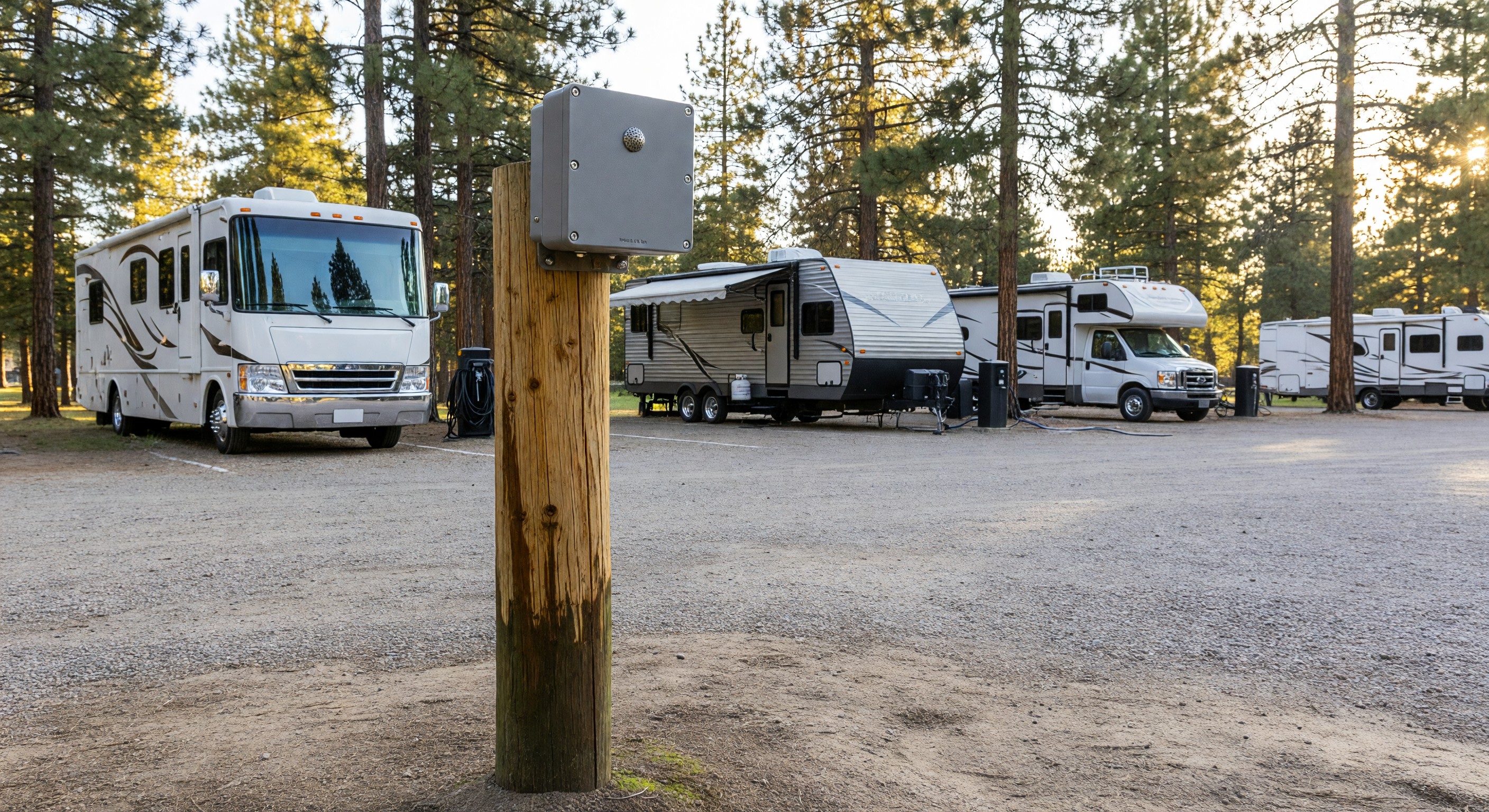
Decibel monitoring sensors: Outdoor sound level meters measure ambient decibel levels continuously. When sound levels exceed a configured threshold — set for your park’s noise standard — the system logs the event and triggers a notification to staff.
This doesn’t identify what is making noise or who is responsible. It identifies that a threshold was exceeded at a specific time and location. Staff then respond to investigate.
Multi-sensor coverage maps: Networks of sensors placed throughout the campground create a spatial picture — noise events at Sensor 3 (near sites 45–50) narrow the area staff need to check. The alternative — a single complaint that says “somewhere around loop D” — gives staff much less to work with.
Event logging: Each threshold exceedance is logged with timestamp and decibel level. This creates a documented record of noise events that is useful for repeat violator enforcement and for demonstrating to guests that noise complaints are taken seriously.
Practical Benefits for Campground Operators
Faster response: A sensor alert that fires at 10:15pm — 15 minutes after quiet hours begin — gets staff to the problem while it’s still occurring rather than an hour later.
Reduced staff burden on rounds: Rather than staff making systematic noise-checking rounds throughout the night, sensor alerts direct them only when and where needed. This is particularly valuable for parks with limited late-night staff.
Objective documentation: When a noise violator disputes the complaint (“We weren’t loud”), sensor logs provide objective data. This doesn’t resolve every dispute, but it provides a factual foundation.
Pattern identification: Recurring noise events from the same sensor location identify persistent violators or problem areas. This data supports interventions ranging from a stern conversation with a long-term resident to infrastructure changes (additional sound buffering between loops).
Limitations and Realistic Expectations
Noise monitoring technology has real limitations that operators should understand:
Sensors can’t identify the source. Knowing that Sensor 7 registered 75 dB at 11:30pm tells you where to look, not who is responsible. Wind, a passing vehicle, or a single barking dog can trigger sensors designed for human-produced noise.
Threshold calibration requires tuning. A threshold set too sensitive generates constant false alerts that staff learn to ignore. Too high a threshold misses genuine violations. Finding the right level for your park’s ambient noise environment takes some iteration.
Rain, wind, and wildlife create interference. Environmental sounds can trigger sensors at levels that human activity would not. Configure sensors to account for typical ambient sound sources in your environment.
Sensors don’t enforce — staff do. Noise monitoring is a detection tool; it doesn’t replace the human interaction required to address violations.
Communicating Your Noise Policy
Technology is most effective when paired with clear, proactive communication:
- Post quiet hours prominently at the entrance and in the pre-arrival email
- Reinforce at check-in for groups and guests who appear to be planning celebration activities
- Include a note that noise levels are monitored and violations are logged — this awareness itself deters some violations
The policy should also be compassionate: a crying baby at 2am is very different from a DJ at 2am. Discretion in enforcement builds community trust.
Frequently Asked Questions
What decibel level is appropriate for campground quiet hours threshold alerts? This varies by park environment and local ordinance. Suburban campgrounds may have local noise ordinances with defined decibel limits (commonly 55–65 dB at night). For parks in rural areas without ordinance guidance, 65–70 dB is often a starting threshold for late-night monitoring. Calibrate by spending time in your park during actual quiet hours and measuring the typical ambient levels.
Can noise monitoring data be used as evidence in a legal dispute? Possibly, depending on jurisdiction and how the data was collected. For typical campground enforcement purposes (warning a guest, requiring early departure), documented noise event logs are useful support. For anything that might involve legal proceedings, consult with an attorney about the evidentiary standards in your jurisdiction.
Should I tell guests that noise monitoring is active? Yes, generally. Disclosing that noise monitoring is in place has a deterrent effect and is more transparent. Guests who know their noise level may be logged are somewhat less likely to test the limits. Some parks include this disclosure in their park rules document.
What does a basic campground noise monitoring system cost? Simple IoT sound level monitors can be deployed for $200–$500 per sensor, plus software subscription costs. A system covering a medium-size campground (8–10 sensors) might run $3,000–$6,000 plus $50–$100/month for the monitoring platform.
Further Reading from Authoritative Sources
- ARVC campground quiet hours policy standards and guest relations resources — ARVC’s operational standards address quiet hours policy and enforcement as a core campground management topic.
- CDC community noise and health impact research — CDC research on community noise and its effects on sleep quality and health provides the public health context for why campground quiet hours enforcement matters beyond mere guest comfort.