Hotel loyalty programs are so well-established that they’ve become table stakes in that industry — guests choose between Marriott Bonvoy and Hilton Honors partly based on loyalty benefits. In camping, loyalty programs are still relatively rare, which makes them a genuine differentiator for parks that implement them thoughtfully.
The technology required to run a campground loyalty program is more accessible than it was even three or four years ago. Here’s a practical guide to building one.
What Makes a Campground Loyalty Program Work
Loyalty programs fail when they’re complicated to earn from, when the rewards aren’t valuable enough to motivate behavior, or when the technology behind them creates friction for guests and staff.
The fundamentals of a working program:
Simple earning mechanics: Guests understand clearly how they earn. “Earn 1 point per dollar spent” or “Earn a stamp for every night you stay” are clear. “Earn 0.75 points per base-rate dollar on qualifying sites, excluding holiday weekends and long-term stays” is not.
Rewards that guests want: Free nights, site upgrades, camp store credits, and activity vouchers are all valued campground rewards. Generic merchandise (branded hats, keychains) is rarely what drives loyalty behavior.
Recognition, not just transactions: The most loyal guests want to feel recognized, not just point-accumulated. A personal note from the owner, a seat at an exclusive campfire event, or a “we remembered your site preference” moment is worth more than 50 points.
Effortless use: The guest should be able to earn and redeem with minimal friction. If redeeming a reward requires calling the office and negotiating, the program will underperform.
Technology Options for Campground Loyalty
Reservation system loyalty module: Some campground PMS platforms include built-in loyalty tracking — stay history, point accumulation, tier management. These are the easiest to implement because they’re native to the system your staff already uses. Check whether your PMS offers this before evaluating standalone tools.
Standalone loyalty platforms: Third-party loyalty platforms (LoyaltyLion, Yotpo, Smile.io, Springbig) can be connected to campground systems with varying degrees of integration effort. These offer more sophisticated loyalty features — referral programs, social sharing bonuses, gamification — but require integration development.
CRM-based loyalty tracking: A customer relationship management platform (HubSpot, even a well-structured Airtable or Google Sheets) can track the key loyalty metrics without dedicated loyalty software. You handle redemption manually. This works at small scale (under 200 active members) with modest complexity.
Custom development: Parks with specific requirements that off-the-shelf tools don’t meet can commission custom loyalty development. This is expensive ($15,000–$50,000+) and only justified for large multi-property operations.
Program Structure: Points vs. Tiers vs. Punches
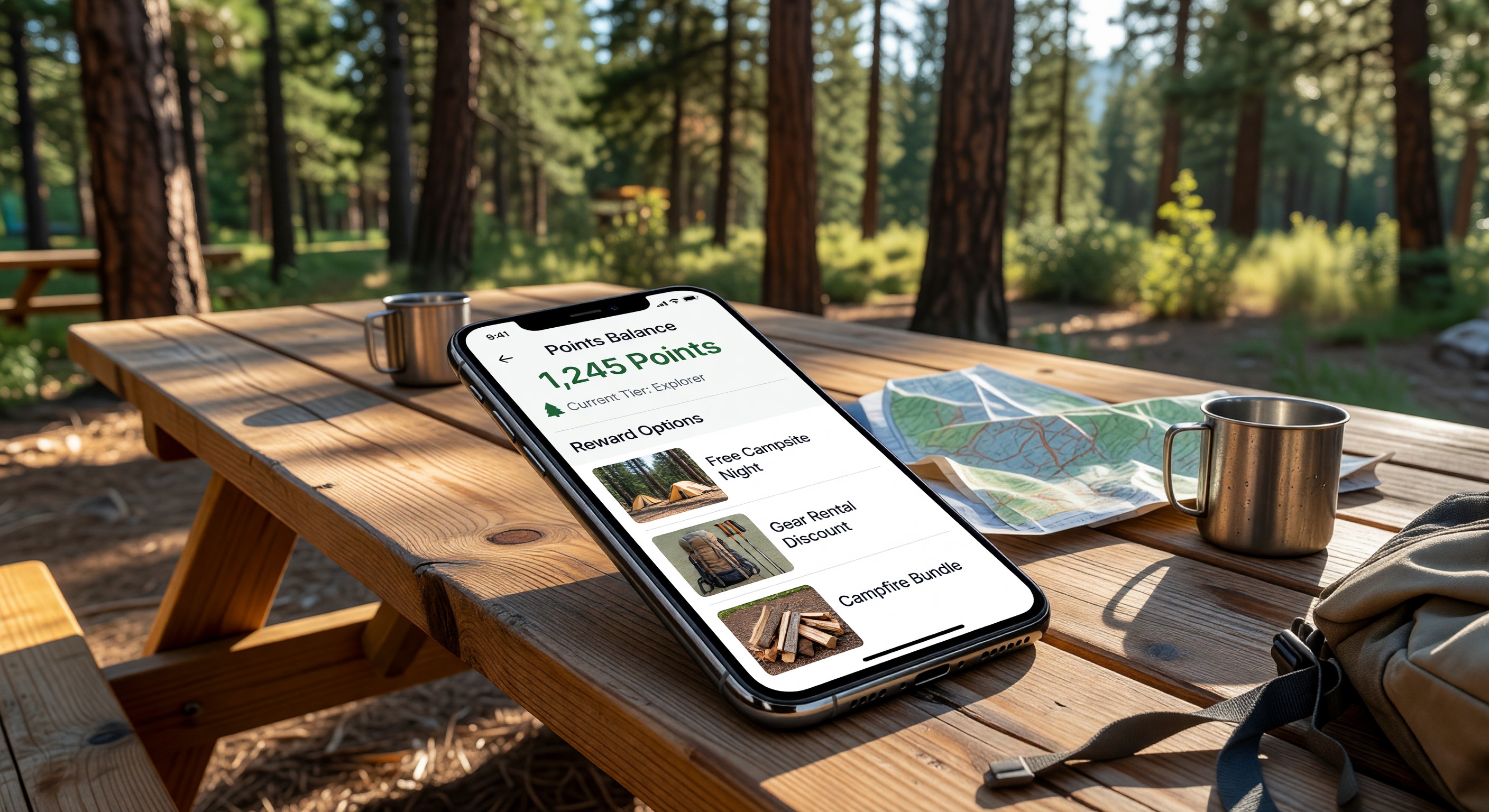
Points-based: Guests accumulate points and redeem for rewards. Familiar and flexible but requires tracking infrastructure.
Tier-based: Guests advance to higher tiers (Silver, Gold, Platinum) based on annual stay count or spending. Higher tiers unlock better benefits. Creates aspiration to “reach the next level.”
Punch card/stamp: Simple — a defined number of stays earns a free stay or upgrade. Easy to understand; easy to manage; gameable (some guests will transfer between sites on the same night to collect stamps, which you’ll need to address in your rules).
Most effective programs combine elements: points for spending, tiers for recognition and aspiration, and simple-to-understand redemption options.
Communication as Loyalty Infrastructure
The technology of the loyalty program is only as valuable as the communication that makes members aware of their status, their progress toward rewards, and the park’s interest in having them return:
Balance statements: Regular emails showing current point balance and what rewards are within reach motivate redemption and re-engagement.
Tier milestone communications: “You’ve reached Gold status!” notifications are high-engagement moments that strengthen the emotional connection to the program.
Birthday/anniversary recognition: A note (or a small benefit) on the anniversary of a guest’s first stay is a personal touch that drives goodwill disproportionate to its cost.
Exclusive member communications: Members should receive information before the general public — priority booking windows, exclusive events, early reservation access. The exclusivity is itself a loyalty driver.
Frequently Asked Questions
What’s a good redemption rate target for a campground loyalty program? Healthy programs see 15–30% of earned points redeemed annually. Very low redemption rates suggest either poor reward value or insufficient guest awareness of the program. Very high redemption rates (above 50%) may indicate the program economics need review.
Should I charge a membership fee for the loyalty program? Some parks do — a paid membership tier that provides premium benefits creates another revenue stream and qualifies more serious members. Free basic loyalty programs with optional paid upgrades are a common hybrid model. Pure fee-based programs without a free tier have lower uptake.
How do I handle loyalty points for group bookings? Define this explicitly in your program terms. Common approaches: the booking coordinator earns all points, or points are allocated to the registered individual on each site, or points are not earned on group rate bookings. Ambiguity creates disputes.
What happens to points when a loyalty member passes away? Morbid but real. Define your policy — most programs allow transfer to an immediate family member or allow redemption by the estate for 12 months post-death. Have this in your terms and answer gracefully when the question arises.
Further Reading from Authoritative Sources
- ARVC campground guest retention and loyalty program resources — ARVC’s industry research and member resources track adoption of guest retention strategies including loyalty programs across the campground sector.
- Go RVing research on RV camper loyalty and repeat visitation patterns — Go RVing publishes consumer research on RV traveler behavior including repeat destination preferences and what factors drive return visits to specific campgrounds.