Food and beverage is one of the highest-margin ancillary revenue categories at campgrounds that develop it thoughtfully. From upgraded camp store offerings to on-site food service to technology-enabled delivery coordination, the food experience at campgrounds has evolved significantly from the era of vending machines and ice bags.
Digital Menu Boards and Ordering
Parks that operate food service — a camp store grill, a concession stand at the pool, a pizza order program — are improving the guest experience and reducing order errors with digital technology:
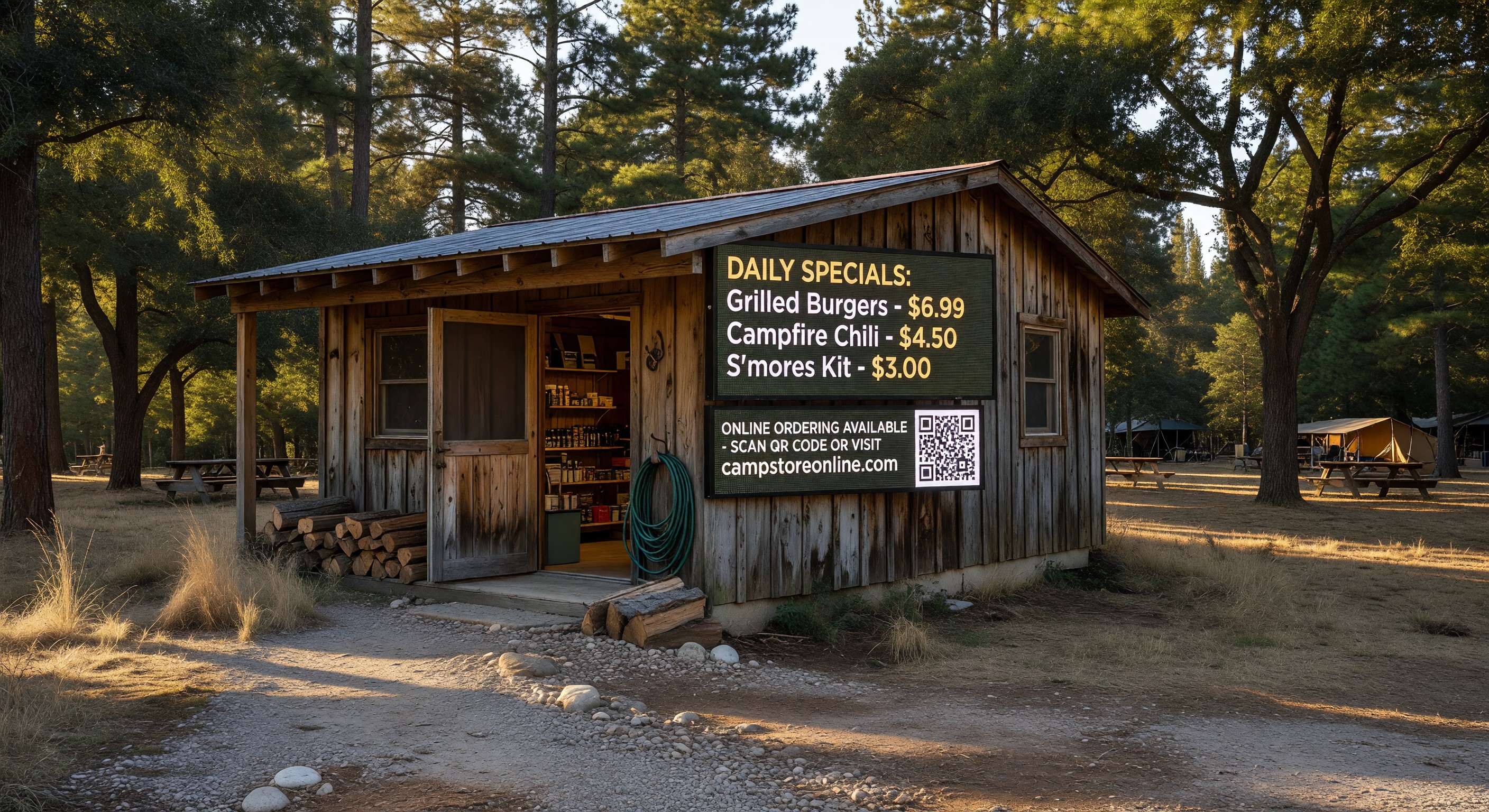
Digital menu boards: LED displays showing the current menu with prices and photos. Easily updated when items change, specials rotate, or prices adjust. More visually engaging than printed boards and eliminates the cost of reprinting when the menu changes.
Online/in-app ordering: Guests can submit food orders through the campground app or a linked web form, selecting items and their site number. The order is fulfilled and delivered or held for pickup. This reduces congestion at counter service points and captures orders that guests would have skipped rather than stand in a queue.
Order tracking: A simple confirmation text when the order is received, and a second when it’s ready, manages guest expectations without requiring staff to personally communicate each status update.
Third-Party Food Delivery Coordination
Third-party food delivery apps (DoorDash, Uber Eats, Grubhub) have expanded into suburban and rural markets, making restaurant delivery increasingly viable for campground guests. The challenge is delivery logistics — delivery drivers often don’t know how to navigate campground layouts, and guests at Site 147 are hard to find.
Designated delivery pickup point: A clearly marked location at the campground entrance (or a designated parking area) where delivery drivers can meet guests. Instruct guests to set the delivery address to the park entrance and list their site number in the delivery instructions.
Camp host coordination: Some parks station a camp host near the entrance during peak evening delivery hours to direct drivers and notify guests of arrivals.
App integration: A few campground apps have begun integrating third-party delivery directly — guests order from restaurants within the app, and the delivery is coordinated through the park’s designated pickup logistics.
Pizza and Local Restaurant Partnerships
One of the most popular campground food models is a partnership with a local pizzeria for campground delivery:
- The campground provides the pizza shop with a site map and campground navigation instructions
- Guests call or text the pizza shop directly, giving their site number and the campground address
- The pizza shop driver navigates to the site using the campground map
This requires no technology investment on the park’s part — just the partner relationship and good navigation tools for the driver. Some parks facilitate this with a QR code in each site linking to the menu of the partner restaurant.
Smart Camp Store Inventory
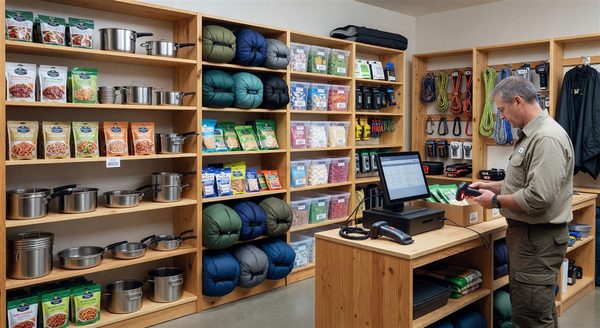
For parks with staffed camp stores, inventory management technology improves profitability:
POS-integrated inventory tracking: As covered in the POS guide, inventory tracking through the point-of-sale system ensures you know what’s selling, what’s not, and when to reorder. This prevents both stockouts (you’re out of ice on the hottest weekend of summer) and overstock (a winter’s worth of s’more kit ingredients that need to be marked down in September).
Perishable management: Tracking expiration dates on perishables reduces spoilage waste. Simple label date marking and daily shelf checks for near-expiration items is a manual but effective system; dedicated food management software handles this at higher scale.
Demand forecasting: Your reservation data tells you how many guests are arriving next weekend, which is the most important input to your ordering decisions. Integrating your occupancy data with your food purchase planning prevents both understocking (running out of popular items on a busy weekend) and overstocking.
Frequently Asked Questions
Should I try to run a full kitchen operation at my campground? Full kitchen operation is appropriate for destination resort campgrounds with on-site restaurant facilities and the volume to support them. For most mid-size campgrounds, a camp store grill with limited menu, supplemented by a delivery partner relationship, is the right level of food service investment. Full kitchen operation requires health permits, trained staff, and volume that most campgrounds can’t support profitably.
How do I handle food allergies and dietary restrictions in camp store offerings? Label ingredients clearly on any prepared food items. For common allergens (nuts, gluten, dairy), clear labeling is both the responsible practice and increasingly a regulatory requirement. Guests with serious allergies will appreciate transparency over reassurance.
What’s the margin on camp store food items typically? Packaged goods (snacks, beverages, s’mores kits) typically carry 40–60% gross margin at campground pricing. Prepared food (grilled items, pizza, hot sandwiches) can carry 60–70% margin when correctly priced. The volume required to justify kitchen staffing is the limiting factor for prepared food programs.
Is it worth setting up a pop-up food stand during peak events? Event weekends often generate 2–3x normal camp store traffic. A temporary expanded food service (a pop-up grill, extended camp store hours, additional staffing) during these periods can meaningfully capture the additional revenue opportunity. Track the additional revenue against the additional staffing cost to evaluate whether the effort is worth repeating.
Further Reading from Authoritative Sources
- ARVC campground food service and ancillary revenue guidance — ARVC provides food service operations guidance for campground operators and tracks ancillary revenue program adoption, making it the most relevant trade authority for campground food delivery program design and implementation.
- FDA food safety requirements for retail food delivery operations — The FDA’s Food Code and retail food safety guidance establishes temperature and time requirements for food delivery that campground food service operations must follow, including the handling standards for hot foods during the delivery window.