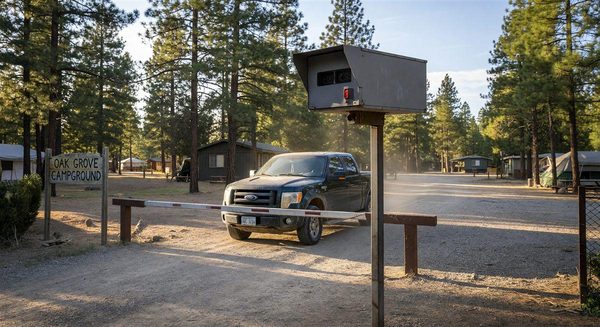
The 2020–2021 period was an unexpected accelerator for contactless campground entry technology. Operators who had been comfortable with traditional front-desk check-in found themselves needing to provide guests with a way to arrive without personal contact. The technology required wasn’t new — it had existed in commercial parking and hospitality contexts for years — but adoption in the campground sector jumped significantly.
This article reviews the contactless entry approaches that gained traction in 2021 and how campground operators implemented them.
The Core Problem Contactless Entry Solves
Traditional campground check-in requires a guest to stop at the front desk, show identification, sign paperwork, collect a credential or entry code, and receive directions to their site. This 5–10 minute process creates a bottleneck on peak arrival days (Friday afternoons), requires front desk staffing during all arrival hours, and — during COVID restrictions — created health risk from close contact.
Contactless entry moves all of these steps to digital channels:
- Registration paperwork is completed online before arrival
- Site assignment is communicated by email or text
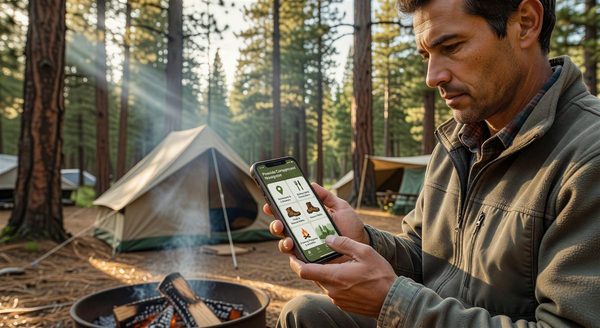
- Entry credentials (codes or RFID credentials) are delivered digitally
- The guest drives directly to their site without staff interaction
The outcome benefits extend beyond COVID: guests who prefer to self-serve get a better experience, staff attention is freed for higher-value interactions, and arrivals at any hour of night are accommodated without staffing implications.
Technology Approaches Used in 2021
PIN code gates with automated code delivery: The simplest implementation. When a reservation is confirmed, an automated system generates a unique PIN and sends it to the guest. The guest enters the PIN at a keypad at the gate on arrival. No staff involvement required.
Many parks that rushed to contactless entry in 2020–2021 implemented this as a first step because it required only software configuration changes — most reservation systems could generate and send codes — rather than new hardware at the gate.
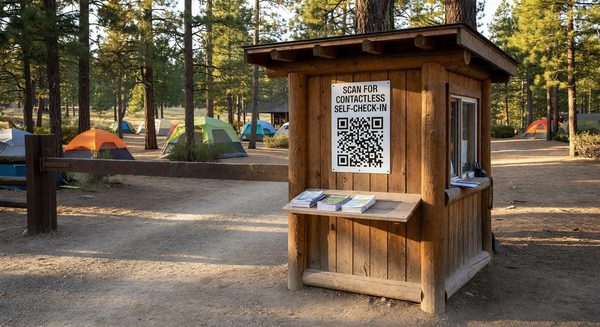
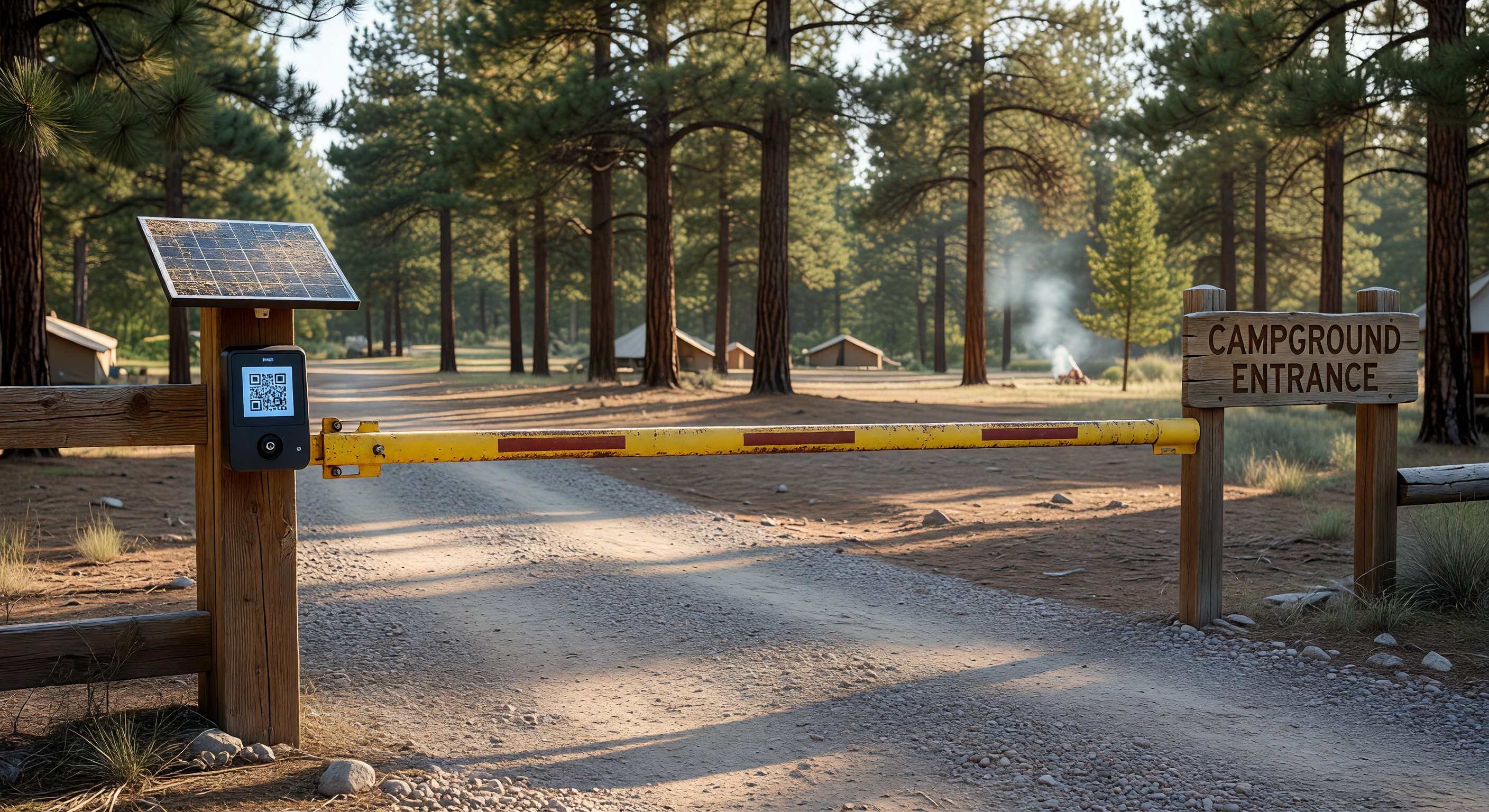
QR code readers at the gate: Some parks installed QR code readers at the gate entry point. Guests receive a unique QR code in their confirmation email, display it on their phone, and the scanner reads it to trigger gate opening. QR readers are touchless (unlike keypads, which guests physically contact) and generate a digital log of each scan.
Mobile app access: A handful of platforms developed park-specific mobile apps where a guest’s reservation stored their access credential. The app communicates with the gate via Bluetooth or generates a one-time code. More sophisticated but requires the guest to download and set up an app.
License plate recognition (LPR): Parks with LPR infrastructure could provide fully credential-free entry — the vehicle’s plate was the credential, recognized automatically on approach. This was the gold standard for friction-free contactless entry but required the most hardware investment.
Operational Requirements for Contactless Entry
Making contactless entry work in practice requires more than just the technology:
Clearly marked site numbering. A guest navigating to their site without staff assistance needs to find their site number without circling the park. Site number posts need to be large, high-contrast, and visible from the driving lane.
Clear internal wayfinding. Maps in the pre-arrival email, supplemented by a printed map at the gate if possible, help guests navigate efficiently.
A backup contact path. When a guest’s code doesn’t work at midnight, there needs to be someone reachable. A text message line monitored by on-call staff during all arrival hours is essential.
Vehicle and site verification process. Contactless arrival means you’re not verifying vehicle information at check-in. Ensure your reservation process collects vehicle make/model/license plate before arrival so you have a record.
What Persisted After the Pandemic
By 2021’s end, operators who had implemented contactless entry weren’t going back. Guest preference surveys consistently showed meaningful portions of campers — often 40–60% — preferring contactless arrival even when the health justification diminished.
The operational benefits were equally compelling: reduced front desk staffing during peak arrival windows, eliminated queues, improved consistency in the check-in experience, and positive guest feedback for the professional feel of a smooth self-serve arrival.
Parks that implemented contactless entry as a COVID response treated it as a permanent improvement rather than a temporary measure.
Frequently Asked Questions
What’s the biggest operational challenge of contactless entry? The most common failure point is guests who don’t read or act on the pre-arrival communication. When a guest shows up without their code because they didn’t open the pre-arrival email, you need a fast recovery process that doesn’t require staff to manually search reservations at length during peak arrival times.
Do contactless entry systems work for guests who aren’t tech-savvy? Mostly yes — entering a PIN code at a keypad is not a high-tech interaction. Where contactless entry creates challenges is for guests who are uncomfortable with digital communication or who don’t check email reliably. These guests benefit from a phone follow-up or a simple laminated card with their site and code information mailed in advance.
How do I handle drive-up guests who want to check on availability — not pay-in-advance reservations? Contactless entry works cleanly for pre-paid reservations. Walk-in, first-come basis entry requires either a staffed arrival window or a self-service kiosk where guests can check availability and pay on arrival.
Is QR code entry at the gate secure? QR codes can be screenshot-shared, which theoretically allows a code to be used by more people than authorized. In practice, this is a low-risk attack vector for most campgrounds — unauthorized campers seeking free entry are more likely to tailgate through an open gate than to forge a QR code. For parks with specific security concerns, time-limited one-use QR codes are more secure.
Further Reading from Authoritative Sources
- ARVC campground contactless operations and guest experience guidance — ARVC tracked the adoption of contactless operations during the pandemic and publishes ongoing guidance on digital guest experience practices, making it the most relevant trade authority for the contactless entry adoption and implementation data in this article.
- CDC contactless service guidance for public recreation facilities — The CDC published guidance on contactless service interactions for public facilities during the pandemic that directly influenced the campground industry’s adoption of contactless arrival workflows, making it the appropriate authority for the public health context of this technology adoption.