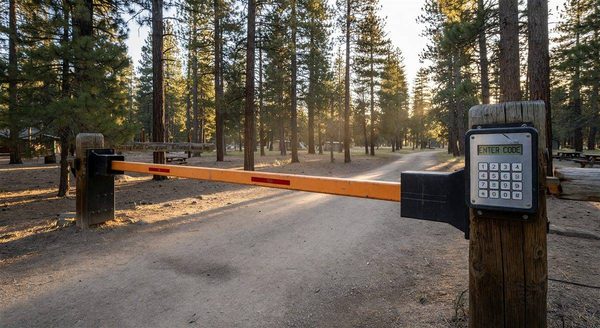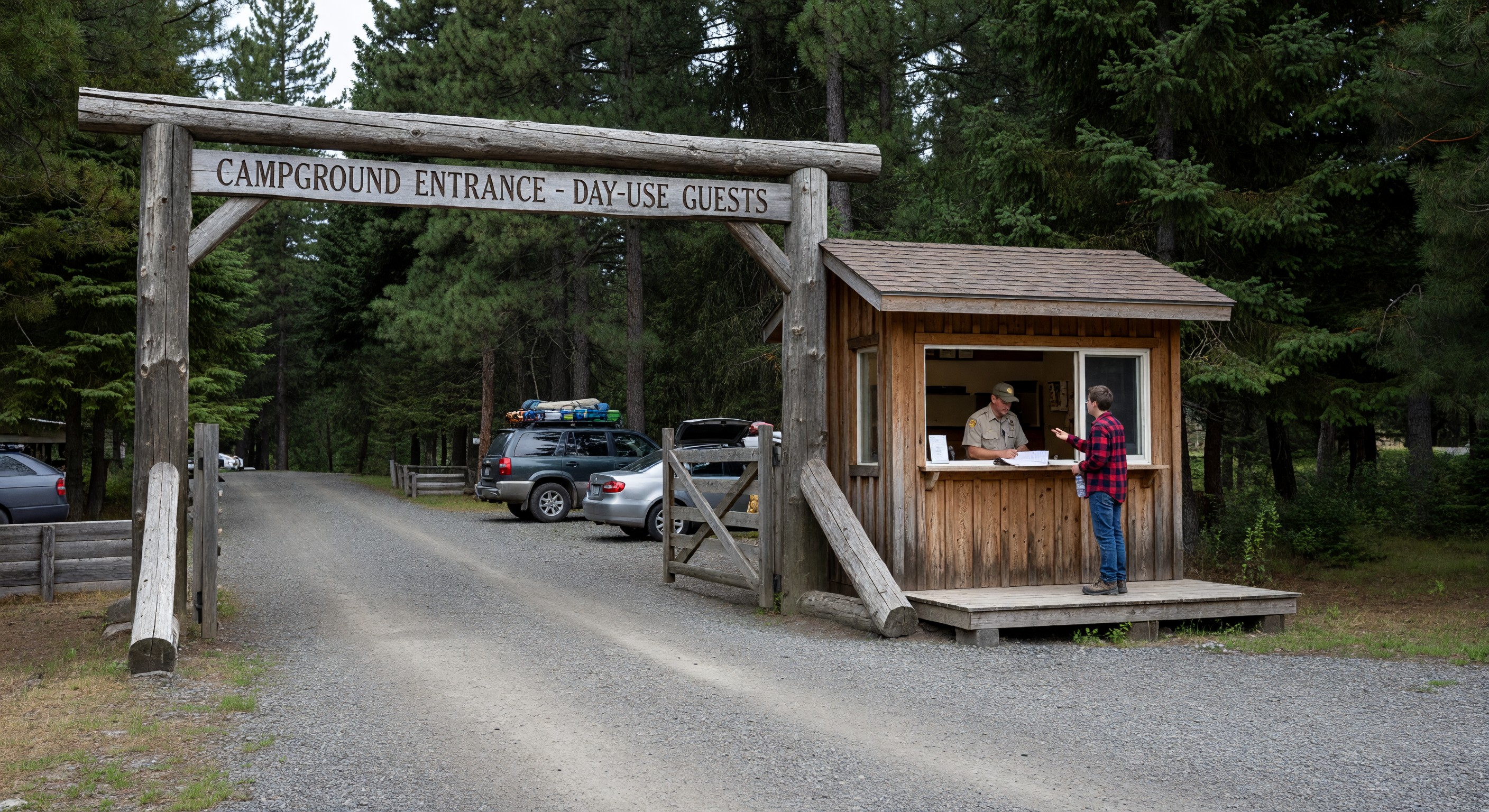
Overnight reservation guests are the core business of most campgrounds, but many parks also accommodate day-use visitors — swimmers, hikers, picnickers, and friends visiting registered guests. Managing this second category of traffic creates operational complexity: how do you allow legitimate visitors access while maintaining security and ensuring appropriate fees are collected?
Visitor management systems — ranging from simple paper logs to integrated digital platforms — address this challenge with varying levels of sophistication. Understanding the options helps operators choose an approach appropriate to their traffic volume and security requirements.
The Visitor Traffic Challenge
Without a system, campground visitor management typically defaults to an honor system or relies on hosts recognizing faces at the gate. Neither approach scales well. As campgrounds grow and traffic increases, the problems multiply:
- Fee collection becomes inconsistent, with some day-use visitors paying and others not
- Security events are harder to investigate without records of who was on property
- Registered guests feel invaded if their site loop is a public thoroughfare
- Staff time is consumed manually processing visitor requests
Structured visitor management creates a consistent, documented process that protects revenue, improves security records, and reduces staff burden over time.
Paper-Based Visitor Systems
The simplest visitor management approach is a paper visitor log at the office or gate. Visitors register their name, vehicle, the registered guest they’re visiting (if applicable), and departure time when they leave. A paper guest pass is issued for display on the dashboard.
Paper systems work for low-volume operations with consistent staffing. Their limitations are significant: records are hard to search, passes are easily counterfeited or shared, there’s no integration with gate access control, and analysis of visitor patterns is labor-intensive.
For campgrounds with more than a handful of daily visitors or with unmanned gate operations, paper visitor management is inadequate.
Digital Visitor Management Platforms
Digital visitor management systems replace paper with a tablet or kiosk-based check-in process. Visitors enter their information (or have it entered by staff), the system creates a digital record, and a printable or digital pass is issued.
Benefits over paper:
- Searchable records for security investigations
- Photograph capture for identification
- Automatic time stamps and departure tracking
- Integration possibilities with gate access systems
- Reporting on visitor volumes, peak periods, and fee collection
Dedicated visitor management software designed for commercial facilities is available, though few products are specifically tailored to campground visitor management. Many operators adapt hospitality or general commercial visitor management tools to their needs.
QR Code and Digital Pass Systems
QR code-based visitor passes have become increasingly common in campground contexts. The workflow:
- Registered guest generates a visitor invitation through the campground’s reservation portal or guest app
- The invitation is sent to the visitor’s email or phone
- The visitor presents their QR code at the gate
- The gate access system reads the QR code, validates it against the reservation database, and opens the gate if valid
This workflow eliminates front-desk stops for visitor processing entirely. The gate handles verification automatically. The registered guest controls their visitor list (often up to a defined maximum per reservation), and the campground has a complete digital record of all entries without manual data entry.
Effective implementation requires a gate access system capable of reading and validating QR codes — a capability available in modern access control systems but not in older gate hardware. If you’re evaluating gate system upgrades, QR code visitor management capability is worth adding to your requirements list.
Day-Use Fee Collection Integration
For campgrounds that charge day-use fees, visitor management systems must handle fee collection as part of the check-in workflow.
Pay-at-office model: Visitors park outside the gate, check in at the office, pay their fee, and receive access authorization. Straightforward but creates friction and requires office staffing during all visitor hours.
Self-service kiosk at entrance: A self-service kiosk where visitors can pay by credit card and receive a gate code or QR pass reduces staffing requirements and allows visitor access during times when the office is closed. Kiosk integration with your reservation system links day-use revenue with overall financial reporting.
Pre-payment through reservation portal: Some operators offer day-use passes purchasable in advance through their booking system. Visitors purchase online, receive a QR code, and use it at the gate on their visit day. This model eliminates cash handling entirely and creates a complete pre-entry record.
Managing Guest Visitor Policies
Beyond day-use visitors, campgrounds must define and enforce policies around guests visiting registered campers. Key policy questions:
- How many visitors may a registered guest have at any time?
- Are visitors charged an additional fee per person or per vehicle?
- Are visitor vehicles allowed in the camping area, or must they park at the day-use area?
- What are the time limits for visitors?
- Are visitors allowed in pool and shower facilities?
Once policies are defined, visitor management systems should enforce them automatically. A gate access system that tracks visitor QR codes can flag when a registered guest has exceeded their allowed visitor count, alerting staff to follow up. Without system enforcement, policies tend to be inconsistently applied.
Integration with Access Control and Security
Visitor management data becomes much more useful when integrated with gate access logs and security camera systems. During a security investigation, the ability to query “who was on property between 8pm and 10pm on Saturday” — pulling from registered guest check-in/out records, visitor logs, and camera footage — provides a complete picture that paper logs cannot.
Access control integration also supports automated visitor departure tracking. If a visitor’s gate code is issued for a specific time window (8am–8pm, for example), the gate system automatically denies re-entry after the authorized period without staff intervention.
Frequently Asked Questions
Do I need a visitor management system if I have a staffed entrance gate? A staffed gate provides natural visitor screening, but without a systematic record-keeping process, the value of that screening is limited. A simple digital log maintained by gate staff — capturing visitor names, vehicle, associated reservation, and entry/exit times — preserves the audit trail that manual screening alone doesn’t provide.
How do I handle visitors who arrive when the office is closed? Options include a self-service kiosk with day-use payment and code generation, requiring visitors to be pre-registered by the hosting camper through the reservation portal, or limiting visitor access to office hours. The right approach depends on how important late-evening visitor access is to your guests and the volume of after-hours visitor traffic.
What’s the typical cost of a visitor management system? Basic digital visitor log software starts around $50–$100/month. Integrated systems with QR code generation, gate access integration, and fee collection capabilities range from $200–$600/month depending on platform and features. Self-service kiosk hardware adds $2,000–$8,000 depending on capability level. The cost-benefit case improves with higher visitor volume and stronger day-use fee revenue.
Can visitors use campground amenities (pool, showers) without additional access concerns? This is a policy decision, but if visitors will have access to amenity areas with separate access points, your access control system should be designed to cover those access points as well. A visitor QR code that opens the main gate but not the pool area creates tiered access control that enforces facility access policies automatically.
Further Reading from Authoritative Sources
- ARVC campground operations and guest management standards — ARVC is the authoritative industry body for campground operations standards, and visitor management is a core operational and liability management topic directly relevant to the campground operator audience of this article.
- Visitor management systems overview and use cases — Wikipedia’s visitor management article provides neutral background on VMS technology categories and use cases, helping campground operators understand how the category relates to broader facility management practices before evaluating campground-specific solutions.