Physical key management for campground cabins, glamping units, bathhouses, and amenity buildings is a persistent operational headache. Keys get lost. Guests forget to return them. Making copies for new guests is time-consuming. Physical re-keying when a key isn’t returned costs money. And guests who check in after hours need the key available — which usually means a physical lockbox with a combination that never changes.
Smart locks solve all of these problems. Digital locks controlled by PIN codes, RFID cards, or mobile apps eliminate physical keys, allow unique time-limited credentials for each guest, and provide an audit log of every entry.
Types of Smart Locks for Campground Applications
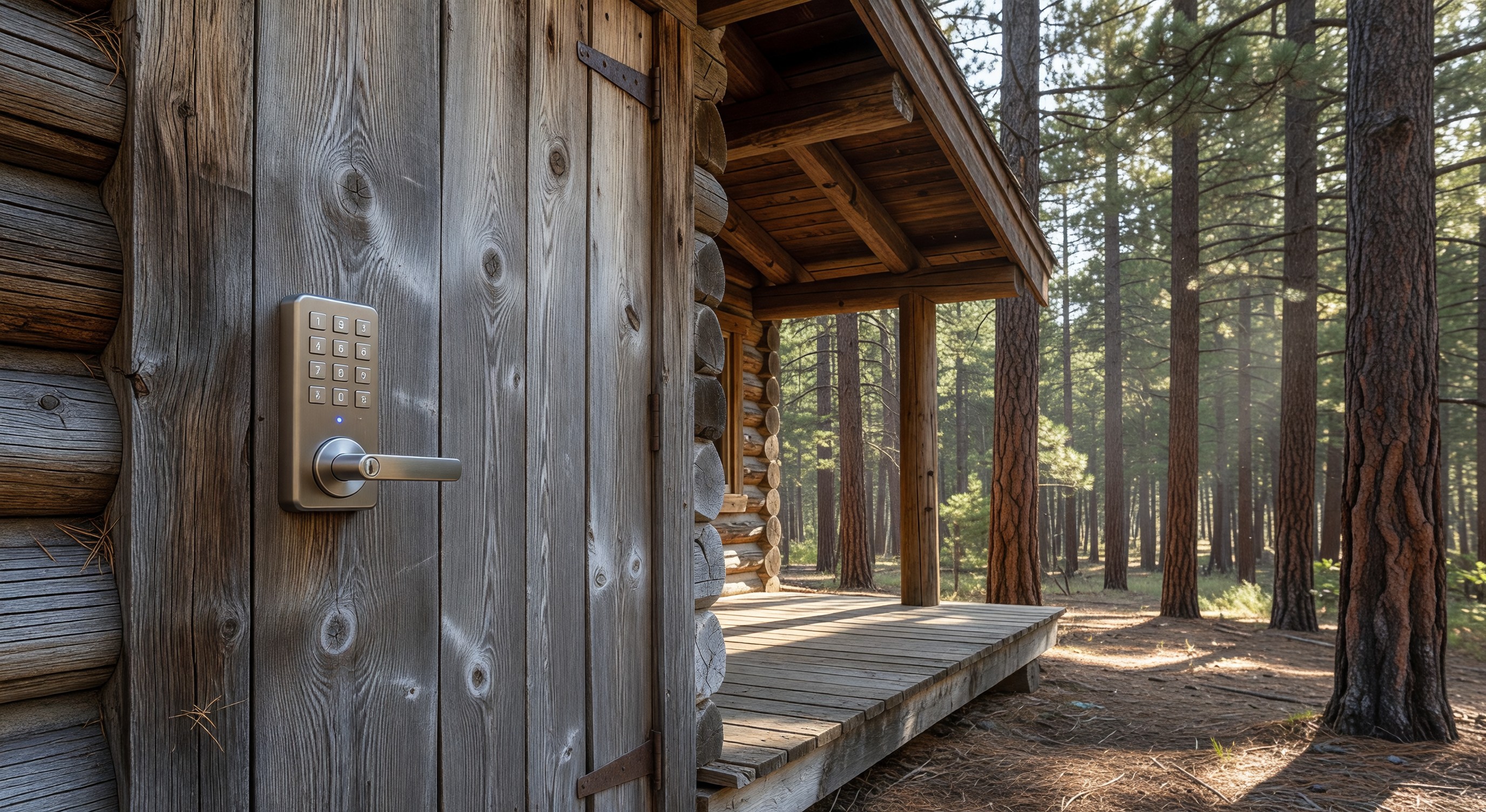
PIN code smart locks: Guest-facing keypad where guests enter a unique code to unlock. The code is programmed to be active only during the guest’s reservation dates. These are the simplest and most intuitive option for cabin guests — no app, no card, just a code they received in their confirmation email.
RFID/card-reader locks: Locks that respond to proximity cards or fobs rather than a keypad. These work well for amenity buildings (laundry rooms, bathhouses, equipment rooms) where the credential is issued once and used repeatedly. Less appropriate for short-term cabin guests who need a new credential each stay.
Bluetooth/app-based locks: Locks that communicate with a smartphone app. The guest installs an app, logs in with their booking credentials, and unlocks the door via Bluetooth from within a few feet. No physical credential needed — the phone is the key. Offers the most sophisticated access control and credential management but requires the guest to have a smartphone and be willing to install an app.
Zigbee/Z-Wave smart locks: Locks that connect to a home automation hub and can be controlled remotely over WiFi. These allow staff to lock and unlock doors remotely from any internet-connected device — useful for cabin housekeeping coordination and remote troubleshooting.
Evaluating Smart Locks for Outdoor Environments
Campground applications expose locks to environmental conditions that indoor smart locks aren’t designed for:
Weather resistance: Look for IP65 or IP66 weather ratings. Cabin locks may be sheltered under a porch; amenity building locks may be fully exposed. Verify the rating matches the installation environment.
Temperature range: In northern markets, locks on unheated outbuildings must operate reliably in freezing temperatures. Battery performance degrades in cold; some lock mechanisms can freeze. Cold-climate locks use lubricants and materials engineered for the temperature range.
Battery life: Most smart locks are battery-powered. Battery life varies from 3 months to 2+ years depending on the lock model, usage frequency, and environmental temperature. Plan a battery check schedule — a dead battery at midnight is a guest experience failure.
Durability: Cabin doors see frequent use from guests of varying levels of gentleness. Locks should be commercial-grade (ANSI Grade 1 or Grade 2 at minimum), not residential hardware.
Integration With Reservation Systems
The real power of smart locks for campground operations is reservation-linked credential management:
When a cabin reservation is confirmed, the smart lock management platform automatically creates a unique code valid from check-in time on the arrival date to checkout time on the departure date. The code is included in the guest’s confirmation email. No staff action required.
When the reservation ends, the code deactivates automatically. When a reservation is cancelled, the code deactivates immediately.
This workflow requires that your smart lock platform can communicate with your reservation management system — either through a native integration, an API connection, or through a channel like IFTTT or Zapier.
Several platforms have built campground-specific smart lock integrations: some campground PMS vendors have partnered with lock manufacturers (August, Schlage, Yale are common in this space) to provide native integrations.
Amenity Building Applications
Beyond cabins and glamping units, smart locks serve multiple campground amenity applications:
Bathhouse access control: Registered guests access the bathhouse; non-guests cannot. The RFID credential issued at check-in (for gate access) can be configured to also open bathhouse doors using the same reader infrastructure.
Laundry room access: During hours of operation, laundry rooms may be freely accessible. After hours, lock them to prevent non-guests from using the facilities.
Equipment rooms: Kayak storage, bike storage, or sports equipment areas can be secured with smart locks — guests who rented equipment at booking get a one-time or stay-duration code that opens the equipment storage.
Staff-only areas: Maintenance rooms, electrical rooms, and storage areas can be secured without physical key management.
Frequently Asked Questions
What happens if a guest forgets their PIN code and can’t get in? The on-call staff member can issue a new code remotely via the smart lock management app, or look up the existing code in the system and repeat it by text. Recovery is much simpler than physical key management — no one needs to drive to the property to let the guest in.
Can I use smart locks on RV site pedestals or storage lockers? Smart lock technology is primarily designed for swinging doors. For storage lockers, some manufacturers offer padlock-style smart locks. For RV site pedestals, access to the electrical hookup is typically managed through on/off control at the pedestal or through billing systems rather than physical locks.
What if cellular or WiFi connectivity fails — do smart locks still work? Most smart locks store the current access credential list locally. As long as the credential was programmed while connectivity existed, the lock will accept it even offline. The limitation is that new credentials can’t be pushed and existing credentials can’t be revoked while connectivity is down.
How do I handle a guest who damages a cabin and leaves before checkout inspection? Smart lock access logs tell you exactly when the cabin was last accessed and can confirm the timeline of events. Combined with security camera footage (if you have cameras covering cabin approaches), this documentation is valuable for damage claims and chargeback disputes.
Further Reading from Authoritative Sources
- ARVC campground rental accommodation technology standards — ARVC provides technology standards for campground rental accommodations including cabins and glamping units, making it the most relevant trade authority for the contactless check-in and smart lock adoption practices in this article.
- Smart lock technology types and wireless communication protocols — Wikipedia’s smart lock article provides authoritative technical background on smart lock communication protocols, credential management capabilities, and technology categories that support readers evaluating campground accommodation lock options.