Security incidents at campgrounds range from minor property damage to serious crimes. How an operator responds — in the first hour, the first day, and the following weeks — affects both the immediate outcome for those involved and the long-term legal and reputational implications for the business.
Having a defined incident response process before an incident occurs is far better than improvising under pressure. Here’s a framework organized by incident severity.
Incident Classification
Not all incidents warrant the same response. A useful three-tier classification:
Level 1 — Minor incidents: Noise complaints, minor rule violations, small property damage (guest damages a picnic table, a car bumper is nicked in the parking area). Response: document, address guest concern, resolve internally.
Level 2 — Significant incidents: Significant property damage, theft, physical altercation between guests, suspected trespass with evidence. Response: document thoroughly, attempt to identify responsible parties through access logs and cameras, involve law enforcement if appropriate, notify insurance.
Level 3 — Serious incidents: Medical emergency, violent crime, fire, sexual assault, serious injury. Response: immediate emergency services call, preserve scene, cooperate fully with emergency responders, notify ownership and legal counsel, media management if needed.
First Response Checklist
When staff become aware of a security incident, the first 30 minutes are critical:
Ensure safety first. Is anyone in immediate danger? If yes, call 911 before anything else.
Preserve the scene. Don’t touch, move, or clean anything that might be evidence. This is especially important in serious incidents.
Document immediately. Write down what is known, when it was reported, and who reported it. Time-stamped notes are valuable if the incident later becomes a legal matter.
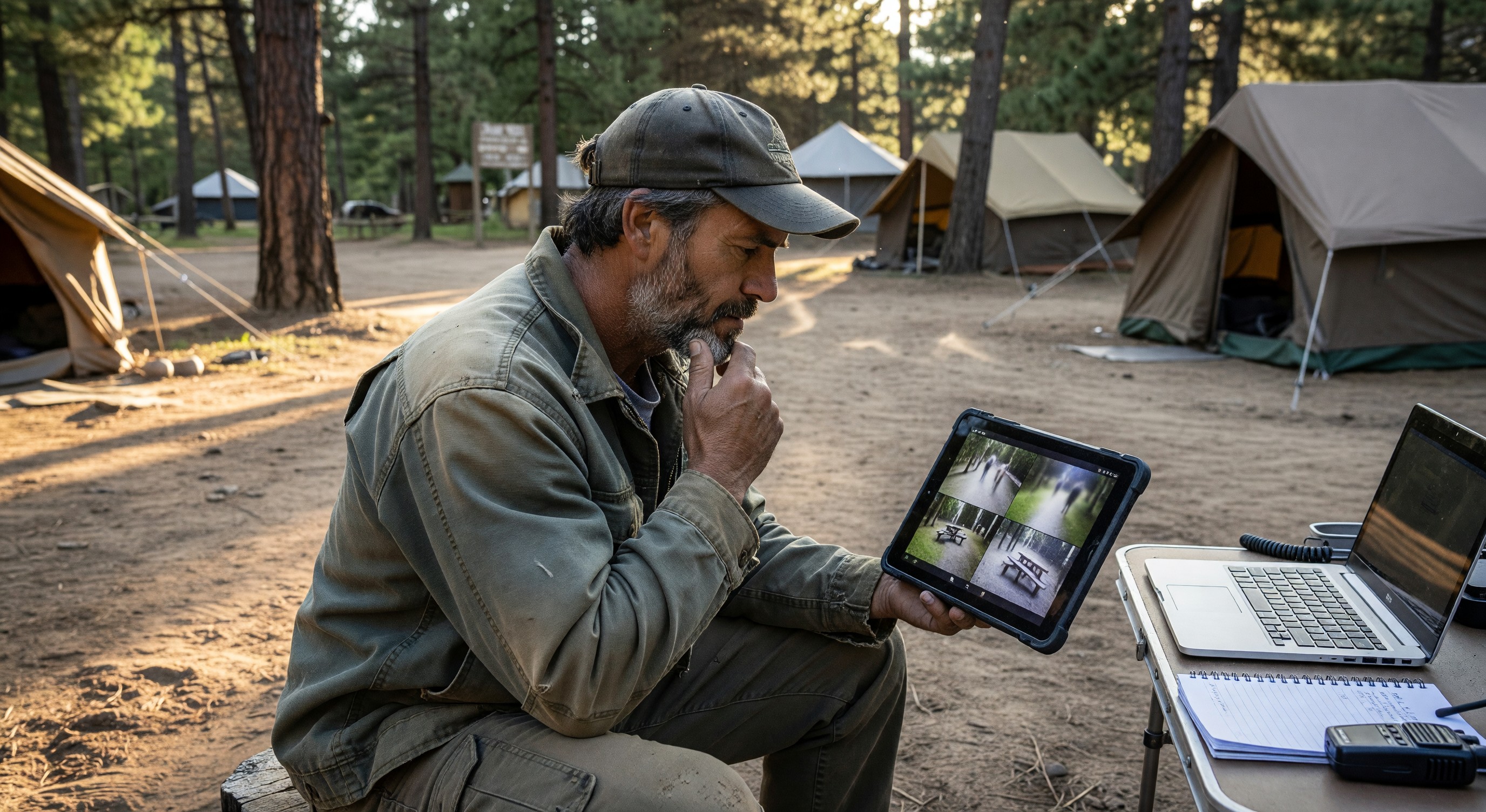
Pull relevant video. If cameras covered the incident area, access and export the footage immediately. Most digital recording systems overwrite oldest footage first — delay risks losing critical evidence.
Pull access logs. Export gate and access control logs for the relevant time period.
Contact law enforcement if the incident warrants it. Many operators are hesitant to involve police in guest disputes, but for theft, assault, or serious property damage, police involvement creates an official record that protects you.
Notify the appropriate staff. Your manager or owner should be informed of Level 2 or Level 3 incidents promptly, regardless of time.
Documenting the Incident Properly
Thorough documentation serves multiple purposes: insurance claims, law enforcement cooperation, legal defense if you’re sued, and institutional learning.
For every Level 2+ incident, create an incident report that includes:
- Date, time, and location of the incident
- Who reported it and when
- Names and contact information of all involved parties (guests, witnesses, staff)
- Description of what occurred (objective description, not judgment)
- Physical evidence collected (photographs of damage, screenshots of access logs, exported video)
- Actions taken (staff response, law enforcement contact, notifications made)
- Outcome or resolution
Store incident reports in a dedicated location — a physical binder or a digital folder — accessible to management but not to general staff. Retain them for at least 3 years, or longer if legal action is pending.
Communicating With Guests Involved in Incidents
How you communicate with guests during and after incidents affects both their experience and your legal exposure:
Be empathetic but factual. Acknowledge the guest’s experience without admitting fault for incidents where liability is unclear.
Avoid unilateral apologies that imply legal liability. “I’m sorry this happened and we’re going to investigate” is appropriate. “This is our fault, we should have had better security” is a statement that could be used against you.
Follow up promptly. Guests who feel heard and informed are less likely to escalate. Guests who feel ignored become the source of negative reviews and lawsuits.
Involve insurance and legal counsel before making any settlement offers or admissions.
Technology That Supports Incident Response
Gate access logs, security cameras, and smart lock audit trails are all tools that serve incident response. But they only help if they’re configured and maintained in advance:
- Camera coverage in areas where incidents are likely to occur (not just at the gate)
- Log retention long enough to be useful (90 days minimum)
- Staff trained to access and export evidence before it’s overwritten
- Remote access capability so management can review footage without being on-site
Frequently Asked Questions
Should I report all security incidents to my insurer? Not necessarily immediately, but your policy will specify what types of incidents must be reported and within what timeframe. Review your liability policy’s reporting requirements and err on the side of reporting. Failing to report a claim in a timely manner can affect coverage.
How do I handle a guest who threatens to leave a negative review because of a security incident? Address the underlying issue — if the incident reflects a genuine gap in your security, acknowledge it and describe what you’re doing about it. A review based on a genuine security failure that was handled well is far less damaging than one based on a security failure that was dismissed. You can’t prevent guests from sharing their experience, but you can influence whether the experience ends well.
What if a guest files a police report against my park? Contact your attorney before responding to the police if possible. Cooperate with law enforcement professionally. Provide documentation you have (incident report, footage, access logs). Do not speculate or offer opinions about fault.
How should I train seasonal staff to handle security incidents? Include incident response in new staff orientation training. Walk through the incident classification system, the first response checklist, and who to call for each tier. Role-playing a fictional incident during training is more effective than reading a protocol document.
Further Reading from Authoritative Sources
- ARVC campground security incident management and guest relations guidance — ARVC provides security incident management guidance for campground operators, including law enforcement cooperation protocols and incident documentation standards relevant to the response procedures described in this article.
- OSHA workplace violence prevention and incident reporting standards — OSHA publishes workplace violence prevention guidance that applies to campground operations where guest-related security incidents can affect staff safety, and its recordkeeping requirements inform the incident documentation practices campground operators should follow.