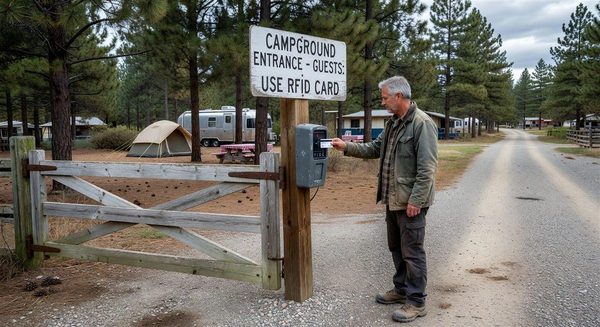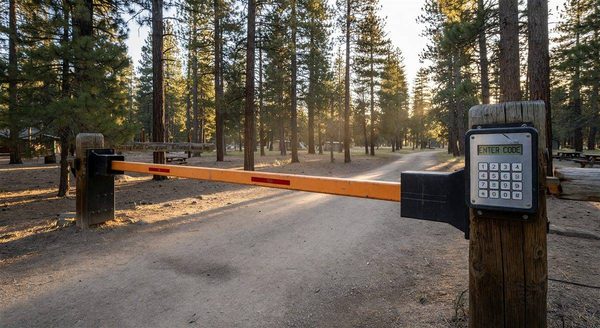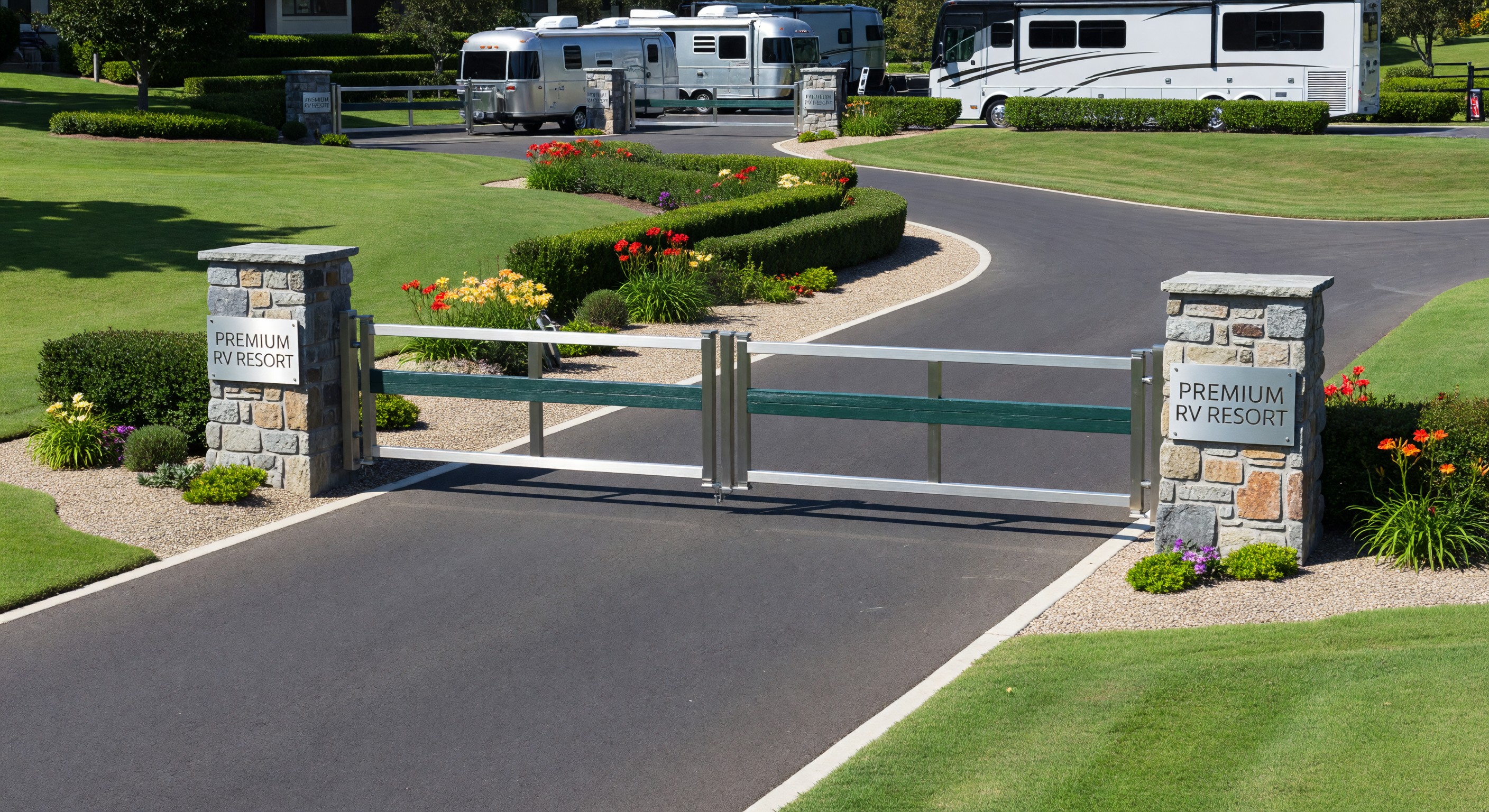
The distinction between “campground” and “RV resort” is more than marketing — it reflects a genuine difference in amenity level, guest expectations, and operational complexity. A 400-site RV resort with a waterpark, fitness center, multiple pools, a restaurant, a dog park, and 24-hour front desk service has access control needs that a 50-site campground doesn’t.
By 2022, the RV resort sector had developed a more sophisticated approach to access management, driven by post-pandemic investment and the expectation of hotel-comparable security standards from premium guests.
The Multi-Zone Access Model
Basic campground access control is binary: you’re either inside the gate or you’re not. RV resorts need a more granular model:
Zone 1 — Property perimeter: The outer gate. All registered guests have access; day visitors may or may not (depending on the resort’s day pass policy).
Zone 2 — Common amenity areas: Pools, hot tubs, fitness centers, recreation facilities. Access for registered guests; potentially restricted to specific site types (premium guests only for certain amenities) or time-restricted (pool closes at 10pm).
Zone 3 — Premium amenities: Exclusive pool, spa, rooftop deck, marina — premium tier guests or separate day pass holders.
Zone 4 — Guest accommodation: Cabins, glamping units, or rental units that require separate key access.
Zone 5 — Staff and service areas: Back of house, maintenance, laundry facilities, linen storage.
Each zone may have different credentials, different access hours, and different guest populations. Managing this with a single unified system is both more efficient and more secure than piecing together separate systems.
Technology Architecture for Multi-Zone Control
Unified access control platform: A single software platform that manages credentials, zones, time windows, and access logs across all readers. The alternative — separate systems for the gate, the pool, and the cabins — creates data fragmentation and management complexity.
Reader hardware consistency: Using the same reader technology (RFID protocol, Bluetooth, etc.) across all zones allows a single credential type to work across zones, with access level determined by the credential’s permissions rather than by physical key.
Centralized credential management: When a guest checks in, one credential issuance event grants them access to all the zones appropriate for their booking type. When they check out, one revocation event removes all their zone access simultaneously.
Time-based access rules: Pool access from 7am to 10pm; fitness center from 6am to 11pm; guest accommodation 24/7. These rules are applied to credential types, not managed manually per guest.
The Single-Credential Guest Experience
From the guest’s perspective, the ideal experience is a single credential that handles all their access needs throughout the property. This might be:
- A plastic wristband with an embedded RFID chip
- An app on their smartphone
- A key card (the hospitality industry’s familiar standard)
The credential is issued at check-in (or pushed digitally in a contactless arrival workflow) and works at every access point the guest’s booking entitles them to use.
Wristbands have become the preferred credential for waterpark-adjacent resorts because they’re waterproof, hands-free, and comfortable — guests don’t need to remember to carry a card when going to the pool. RFID wristbands also typically support contactless payment for camp store and food service purchases when connected to a guest account.
Integration With Revenue Management
At resort scale, access control intersects with revenue management:
Day passes: Non-staying visitors may purchase day passes for pool or amenity access. Access control enforces which areas their pass covers.
Premium amenity upgrades: A base-tier guest can upgrade to premium amenity access at the front desk. The upgrade is reflected immediately in their credential’s access permissions.
Activity tracking: RFID access logs at amenity areas provide data on which amenities are used, at what times, and by which guest segments. This informs staffing, programming, and capital investment decisions.
Entry and exit data at specific amenity zones tells you utilization patterns more precisely than any survey.
Barrier Gate Considerations at Resort Scale
Resorts with high vehicle volume — multiple daily arrivals and departures, delivery vehicles, staff, day visitors — need commercial-grade barrier gate systems that can handle thousands of cycles per day reliably.
Purpose-built high-cycle barrier gate equipment from commercial barrier gate manufacturers is engineered for high-throughput vehicle control applications and provides the durability and reliability that resort-scale entry operations require.
Frequently Asked Questions
What’s the typical cost to implement a multi-zone access control system at an RV resort? Costs vary enormously with property size and existing infrastructure. A basic multi-zone system for a mid-size resort (main gate, 3–4 amenity zones) might run $30,000–$80,000 installed. A full resort system with hundreds of readers across a large property is a six-figure investment.
How do I handle day visitors who want to use pool facilities at a resort? Day visit passes need their own credential type with limited zone access. The access control system should support issuing a time-limited, zone-restricted credential for day visitors distinct from the full-property credential issued to overnight guests.
Should I require credit card information on file before issuing access credentials, to cover potential damage? At resort scale, yes — this is standard practice for high-amenity properties. A pre-authorized hold on the card covers incidental charges and provides protection for damage or violation of rules.
How does RFID wristband credentialing work operationally at check-in? Wristbands are pre-encoded in batches and kept at the front desk. At check-in, the system assigns the guest’s access permissions to a specific wristband’s chip ID. The wristband is then handed to the guest (or, for multiple guests, a wristband per adult/child is issued per the reservation). If a wristband is lost, the chip ID is deactivated and a new wristband is issued.
Further Reading from Authoritative Sources
- ARVC RV resort operations and technology standards — ARVC represents the full spectrum of RV parks and campgrounds including resort-tier operations, and its standards and member resources directly inform the multi-zone access model described in this article.
- Go RVing consumer data on RV resort guest expectations — Go RVing publishes consumer research on RV traveler expectations and preferences, including data on what guests expect from different tiers of RV hospitality.