Pets — primarily dogs — are at campgrounds in enormous numbers. A significant majority of camping guests bring dogs, and the pet-friendly positioning of a campground is a major booking factor for pet-owning families. Managing this well — enforcing policies consistently, providing appropriate pet areas, and preventing the incidents that generate complaints and liability — requires a systematic approach.
Technology plays a supporting role in pet policy management, from documenting pet registration at booking to managing access to pet-designated areas and monitoring noise compliance.
Pet Policy Framework
Before technology can support pet policy enforcement, the policies themselves must be clearly defined and consistently communicated.
Core policy decisions:
- How many pets per site? (Most campgrounds allow 2; some allow more for full-hookup sites)
- Weight or breed restrictions? (Many campgrounds restrict certain breeds; some restrict dogs over a certain weight)
- Leash requirements? (Off-leash areas, if any, should be clearly designated)
- Vaccination requirements? (Rabies, distemper — documentation at check-in or on honor system)
- Pet deposit or fees? (Refundable deposit for cabins, per-night fee for sites)
- Quiet hours extension for dogs? (Some policies specify that dogs may not bark after quiet hours)
- Pet-free zones? (Poolside, specific cabin areas, playground areas)
Documenting these decisions and publishing them consistently — on your website, in the booking system, in confirmation emails, and in the campground guide — reduces disputes by ensuring guests know what they agreed to when they booked.
Pet Registration at Booking
Collecting pet information at booking — before the guest arrives — has several operational benefits:
Planning site assignments: Some operators prefer to concentrate pet-owning guests in specific site sections, reducing pet conflicts with guests who are bothered by dogs barking or running. This section assignment happens at booking when pet information is known.
Fee collection: If you charge a pet fee, collecting it at booking ensures it’s not forgotten or disputed at check-in. Integrating the fee directly into the reservation reduces the awkward “by the way, we charge for pets” conversation at arrival.
Policy acknowledgment: Having guests check a box acknowledging the pet policy during booking creates a documented acknowledgment. Guests who booked knowing the policy have significantly less basis for complaint about enforcement.
Breed and vaccination documentation: For campgrounds that require vaccination documentation or have breed restrictions, collecting pet information at booking allows verification before the guest arrives rather than at the gate.
Technology for Pet Area Management
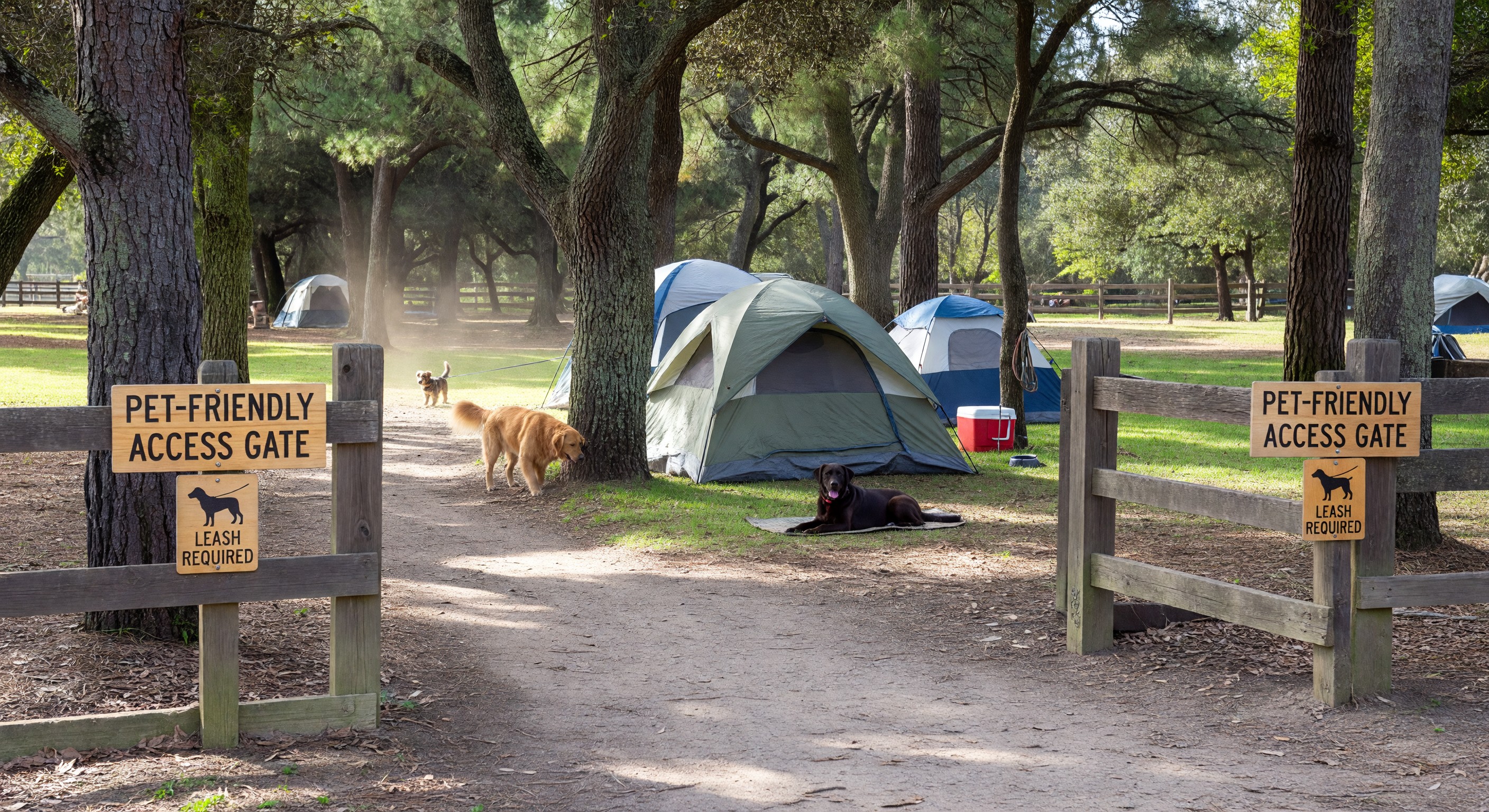
Campgrounds with designated off-leash dog parks or pet-specific areas can use access control technology to manage these spaces.
Gated dog park access: An access-controlled gate on the dog park, with access credentials issued to guests who complete a waiver or register their pet’s vaccinations, limits dog park use to registered guests and creates a layer of accountability. The gate can be configured to allow access during designated hours only.
Capacity monitoring: For small enclosed dog parks where overcrowding creates conflict risk, a simple occupancy counter that tracks entries and exits can alert staff when the park is at capacity. Some implementations use a display at the gate showing current occupancy.
Waiver management: Digital waiver platforms (Smartwaiver, DocuSign) allow campgrounds to require guests to sign a liability waiver before receiving dog park access. Signed waivers stored in a searchable database provide documentation if a dog-related incident results in a claim.
Noise and Behavioral Enforcement
Dog noise — primarily barking — is the most common pet-related complaint at campgrounds. Managing it requires both policy clarity and consistent enforcement.
Quiet hours and dog noise: Including dogs explicitly in your quiet hours policy (guests are responsible for their dogs’ noise during quiet hours) creates the policy basis for enforcement action.
Noise monitoring technology: As covered in the guest experience section, campground noise monitoring systems that detect sound levels and provide location data can identify areas with excessive noise, including dog barking. While not specifically dog noise detectors, these systems give security staff data to guide patrol priorities.
Tiered enforcement: A tiered response to violations — first contact, warning, then escalation — is more defensible and often more effective than immediate punitive action. Document each contact in the incident log. Guests who understand that violations are tracked and that escalation follows repeated violations are more likely to comply.
Incident Management
Dog-related incidents — a dog biting a guest, a dog fight, a dog running loose — require prompt and documented response.
Documentation: Any dog incident that involves injury or property damage should be documented with an incident report (date, time, location, dogs involved, owners identified, description of incident, injuries or damage noted, action taken). This documentation is important for any subsequent liability claim.
Owner identification: Knowing which site a guest is registered at allows staff to identify the dog’s owner when a dog is found running loose or when a complaint is made about a specific dog. This is another reason why pet registration at booking — linking pet information to the reservation — has operational value beyond fee collection.
Notification of incident: Campground operators should notify their liability insurer promptly of any dog bite incident, even if no formal claim has been made. Most commercial liability policies require prompt notification of incidents that may result in claims.
Repeat problems: A guest whose dog is involved in multiple incidents during a single stay — repeated noise violations, aggressive behavior, running loose repeatedly — may need to be asked to leave with their pet. Having a clear policy about when pet-related violations result in removal, and documenting the steps taken before that action, protects the campground in the event of a dispute.
Frequently Asked Questions
Should campgrounds require proof of vaccination for pets? Requiring rabies vaccination documentation at check-in is reasonable and protects both other guests and the campground from liability in a bite incident. Many campgrounds require it. Enforcement practicality is the challenge: verifying documentation for every pet-owning guest during a busy check-in creates friction. Some campgrounds collect attestation (guest checks a box affirming vaccinations are current) rather than requiring physical documentation. Higher-risk situations (enclosed dog parks, extended stays) warrant more rigorous verification.
What breeds should be restricted, if any? Breed restriction policies are controversial and their effectiveness is debated. Some campgrounds and their insurers require restrictions on breeds commonly associated with aggression risk. Others rely on behavioral assessment rather than breed. Review your liability insurance policy for any breed-related requirements before setting your policy. If you implement breed restrictions, apply them consistently — selective enforcement creates both fairness complaints and legal exposure.
How do I handle a guest who brings more pets than allowed? Confront the situation at check-in if possible — before the guest is settled in. “Your reservation shows two pets, but I see three — our policy allows two per site. We can either update your reservation to include an additional pet fee if the site allows it, or you’ll need to make arrangements for the additional pet.” If discovered after check-in, address it directly and professionally: “We noticed you have more pets than your reservation allows. We need to either amend your reservation or ask you to arrange alternative care for the additional pet.” Most guests who tried to sneak extra pets will comply when addressed respectfully.
Do pet-free policies reduce bookings? Pet-free positioning (no pets allowed) can reduce bookings from pet-owning guests — a significant portion of the camping market. Some campgrounds successfully operate pet-free by targeting guests who specifically prefer a pet-free environment (guests with pet allergies, guests bothered by dogs barking). More commonly, campgrounds that have moved from pet-friendly to pet-restricted have seen occupancy impact unless they serve a market that values the restriction. The business decision should weigh your target market against your operational capacity to manage pets.
Further Reading from Authoritative Sources
- ARVC campground policy and operations best practices — ARVC provides operational policy guidance for campground operators, making it the most relevant authority for questions about how pet policies should be structured and enforced in an RV park or campground setting.
- ADA service animal rules for places of public accommodation — The ADA.gov website is the official government source for service animal rules under the Americans with Disabilities Act.