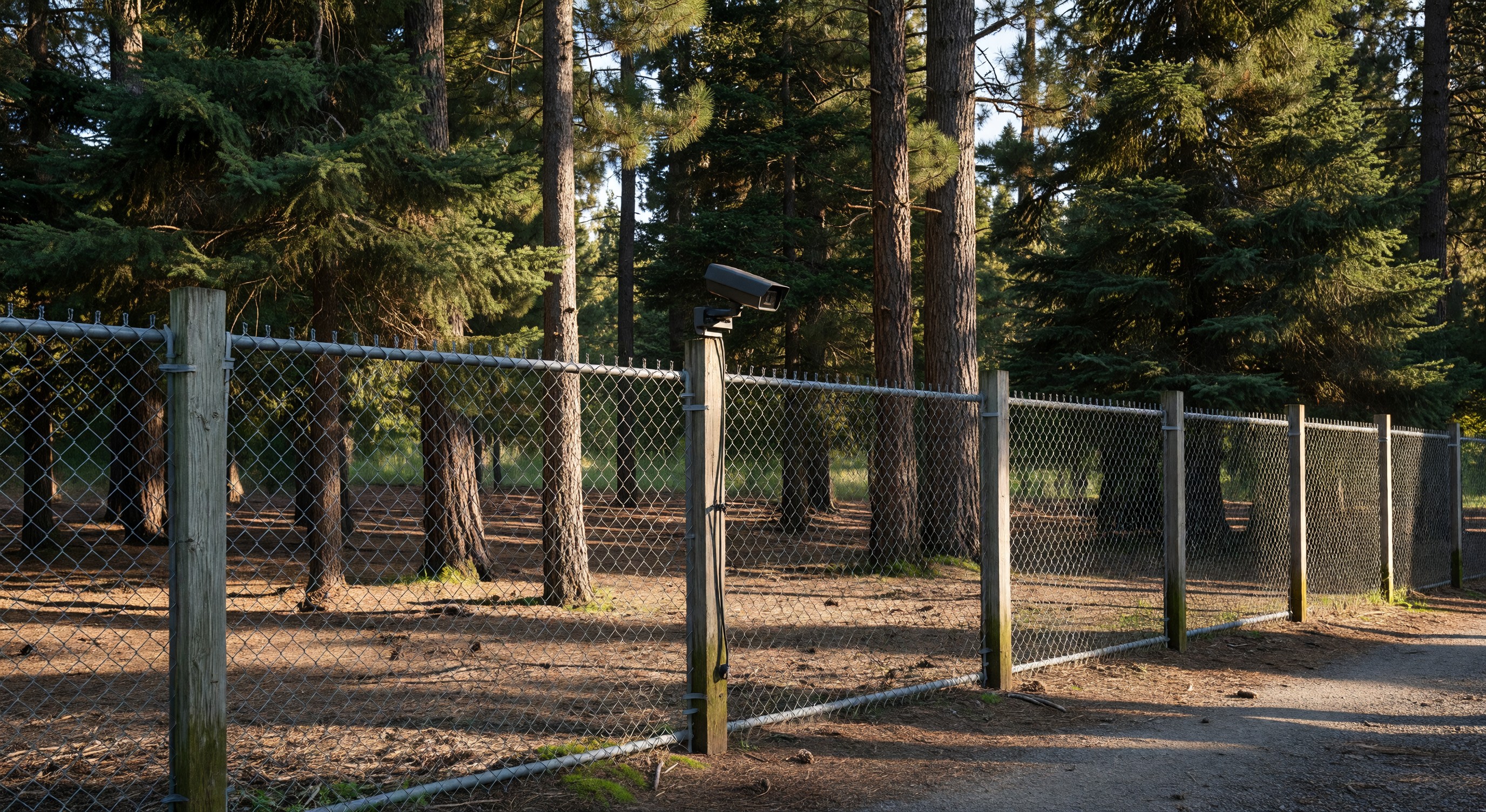
Perimeter security defines the boundary between your campground and the outside world. Without a defined and enforced perimeter, unauthorized access can occur from any direction — not just the front gate. Comprehensive security requires thinking about the full boundary, not just the primary entry point.
For most campgrounds, perimeter security is a tiered concept: some areas require physical barriers, others use natural features or signage, and some rely on camera monitoring and response protocols. Full perimeter fencing is rarely necessary or practical, but a thoughtful perimeter plan is.
Assessing Your Perimeter Vulnerabilities
The first step is a perimeter walk — literally walking the boundary of your property and noting:
Points of unauthorized vehicle access: Are there service roads, trail access points, or low spots in a fence where a vehicle could enter other than through your main gate? These are priority security gaps.
Points of unauthorized foot access: Gaps in fencing, low fence sections, areas adjacent to public trails or roads where guests could walk in from adjacent property.
Areas with poor natural visibility: Dense vegetation, terrain features, or buildings that create blind spots from staff vantage points or cameras.
Existing security features: What fencing, natural barriers, lighting, and signage is already in place? Document it and evaluate whether it’s adequate.
Adjacent properties and their risk profile: A campground adjacent to a public park or trailhead faces different perimeter challenges than one surrounded by private agricultural land.
Fencing Options for Campground Perimeters
Full perimeter fencing is a significant cost — $8–$25+ per linear foot depending on fence type, topography, and market. For a property with 2,000 linear feet of boundary, that’s $16,000–$50,000 before installation labor.
Most campgrounds use a selective approach — high-security fencing at vulnerable points and lighter measures (or none) elsewhere.
Chain-link fencing (standard): Cost-effective, visible, and a reasonable deterrent. 6-foot chain-link is the most common campground perimeter fence where fencing is used. Add barbed wire or razor wire at the top for higher deterrence at specific vulnerable sections.
Privacy fence: Provides visual screening as well as boundary definition. Wood or composite privacy fence is more expensive than chain-link and doesn’t allow visibility through the fence (which is a two-way consideration — you can’t see what’s on the other side either).
Post-and-rail fence with no-climb wire: A more natural-looking option appropriate for parks where aesthetics matter. The wire infill prevents animals and people from slipping through while maintaining a visual style consistent with the campground environment.
Natural barriers: Dense native plantings, hedgerows, or existing vegetation serve as effective perimeter barriers in many campground settings. They’re low-cost and visually natural but take time to establish and require maintenance.
Secondary Access Control Points
Beyond the primary vehicle gate, secondary access control points protect specific assets:
Pool gates: A separate keyed or RFID-controlled gate to the pool area restricts access to registered guests and prevents liability issues from unauthorized pool use.
Boat launch or waterfront access: Campgrounds with exclusive waterfront access often install controlled gates at the waterfront to ensure only registered guests use the amenity.
Amenity buildings: As noted in the RFID article, card-controlled access to bathhouses, laundry rooms, and camp stores prevents non-guest use.
Staff/service area gates: Maintenance yards, utility areas, and staff-only zones should be separately secured from guest areas.
Lighting as a Security Tool
Adequate lighting along perimeter access points, pathways, and common areas is one of the most cost-effective security investments a campground can make. Darkness enables unauthorized entry and creates environments where incidents occur with lower detection risk.
Motion-activated lighting along the fence line and at secondary access points is efficient — consuming power only when movement is detected, while providing bright illumination that deters and alerts.
Solar-powered pathway and perimeter lights eliminate the need for power runs to remote fence sections, though battery performance on cloudy days and in winter is a limitation.
Frequently Asked Questions
Do I need to fence my entire property to have effective perimeter security? No. Identify your actual vulnerability points — where unauthorized access is occurring or plausible — and address those specifically. Full perimeter fencing is the right answer for some parks but is expensive and often unnecessary if selective hardening of vulnerable points achieves the same security outcome.
What’s the most cost-effective first step in improving campground perimeter security? Improve lighting. Lighting dark areas has an immediate deterrent effect at a cost much lower than fencing or electronic systems. Combine lighting with a camera that covers the newly lit area, and you’ve significantly improved both deterrence and detection capability.
How do I address unauthorized access from adjacent hiking trails? This is a common challenge for parks adjacent to public land. Options range from signage (cheapest, least effective) through natural plantings and low fencing to full security fencing (most effective, most expensive). A combination of signage, natural barriers at access points, and camera monitoring is often the practical middle ground.
Should I hire a security professional to audit my perimeter? For parks with frequent unauthorized access incidents or high-value assets (marina, resort amenities), a professional security assessment is worth the cost. Security consultants who specialize in hospitality or outdoor recreation properties can identify vulnerabilities and recommend prioritized solutions. For smaller parks with modest security concerns, a thorough self-assessment using a structured checklist may be sufficient.
Further Reading from Authoritative Sources
- ARVC campground security planning standards and member resources — ARVC’s industry network includes security consultants and service providers who specialize in outdoor hospitality properties.
- NFPA fire safety and access codes for outdoor recreational facilities — NFPA codes govern fire department access requirements, which affect how campground perimeter gates and secondary access points must be configured to allow emergency vehicle entry.