Operating multiple campground locations introduces a layer of complexity that single-property operators don’t face: how do you maintain consistent security standards, manage access credentials, and monitor for incidents across properties that may be geographically dispersed and staffed at different levels?
The answer has historically been distributed management — each property handles its own security independently, with limited visibility or coordination from regional or corporate leadership. Modern centralized security platforms offer a better model.
The Multi-Location Security Challenge
A campground operator with 5–10 properties faces several compounding challenges:
Inconsistent security standards: Without centralized oversight, each property develops its own procedures, credential policies, and response protocols. Quality varies with property management and is hard to audit or enforce from a distance.
Credential management complexity: Guests with memberships or loyalty programs may be entitled to access across multiple properties. Managing consistent credentials across separate systems at each property is labor-intensive and prone to errors.
Visibility gaps: Leadership can’t see what’s happening at individual properties without physically being there or calling local staff. Security incidents may not be escalated appropriately.
Maintenance and compliance tracking: Ensuring gate systems, cameras, and security equipment are maintained and functioning across multiple sites requires systematic tracking that doesn’t happen naturally in decentralized operations.
Centralized Access Control Platforms
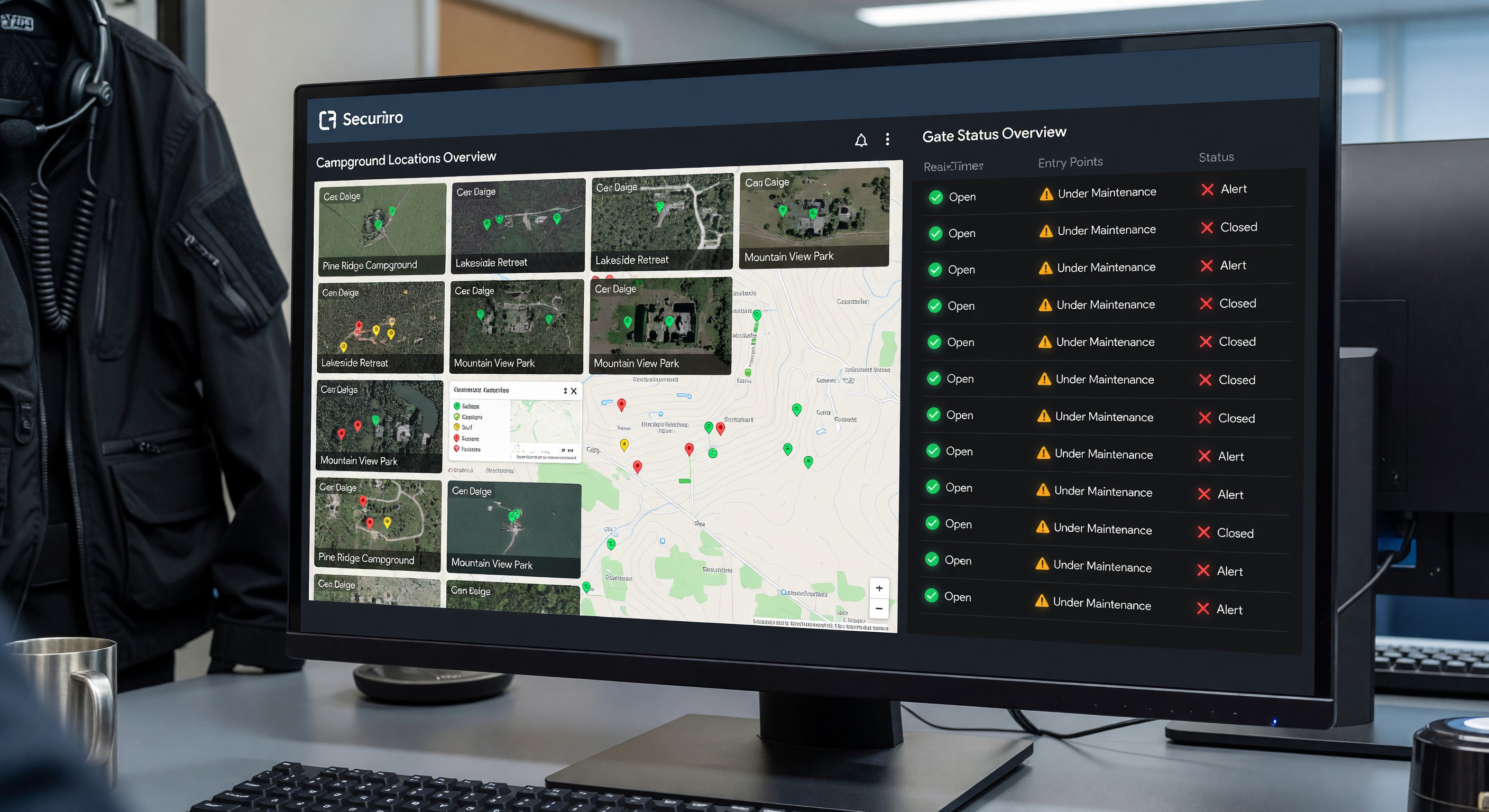
Cloud-based access control platforms designed for multi-site operations address these challenges with a unified management interface that spans all properties.
Single credential system: A membership credential — RFID card, app-based credential, or a unique code — works at all properties in the network. Guests with multi-property access rights don’t need separate credentials for each location.
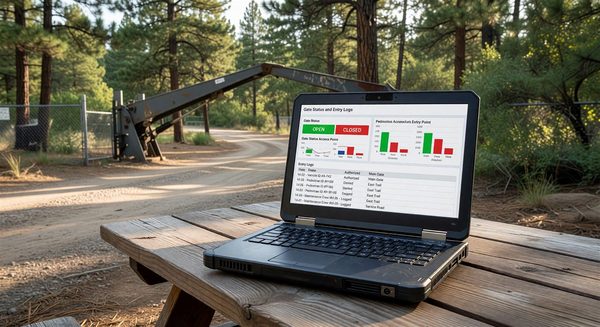
Consolidated audit trails: Entry and exit records from all properties are visible in a single system, searchable across locations. If a guest reports a problem that began at one property and continued at another, the access log provides a complete picture.
Central credential management: When a member’s access needs to be revoked — non-payment, security incident, or membership cancellation — a single action in the central system deactivates credentials at all properties simultaneously.
Property-level reporting rolled up to portfolio view: Operators can view security metrics at the individual property level and roll them up to a portfolio view: total incidents, gate uptime percentages, after-hours entry volume, and other key performance indicators across all locations.
Standardizing Security Procedures Across Locations
Technology enables standardization, but procedures must be documented and enforced for standardization to be meaningful.
Minimum security standards: Define the minimum access control infrastructure required at each property — gate coverage of all vehicular entries, camera coverage of entry points, minimum retention period for security footage, required credential types.
Incident response protocols: Document what constitutes a reportable security incident, how local staff should respond, and how incidents should be escalated and documented in the central system.
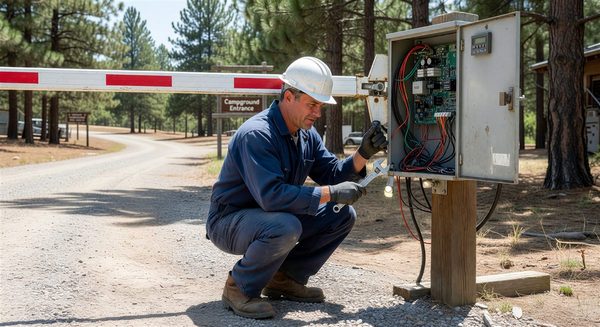
Maintenance schedules: Establish required maintenance intervals for access control equipment across all properties. The central management platform should track maintenance history and alert when inspections or service are due.
Audit processes: Periodic security audits — whether conducted by regional staff or self-assessed by property managers against a standardized checklist — ensure local compliance with portfolio-wide standards.
Staff Credential Management Across Properties
Multi-location operators frequently transfer staff between properties, hire seasonally, and have regional staff who need access to multiple locations. Managing staff credentials across properties is its own administrative challenge.
Cloud access control platforms handle staff credential management through role-based access control. Define roles (local staff, regional manager, maintenance technician, corporate security) with specific access privileges at specific properties. When a staff member’s role or property assignment changes, update their role assignment rather than managing individual property access manually.
The same credential revocation importance that applies to departing guests applies to departing employees — potentially more so, given that former staff know operational details and security blind spots. Cloud platforms that deactivate credentials instantly across all properties at role removal are essential for responsible security practices.
Camera System Integration for Multi-Site Operations
Security camera systems at individual campground properties become significantly more useful when integrated with a central video management system (VMS) that aggregates feeds from all locations.
Remote incident review: When a security incident is reported at a property, regional security staff or corporate leadership can access camera footage directly from the central VMS without traveling to the site.
Staffing efficiency: Properties with lighter security events can potentially be monitored remotely by staff at a central location, reducing the security staffing footprint needed at each individual property.
Cross-property pattern recognition: Security concerns that manifest across multiple properties — a vehicle appearing at incidents at different locations, for example — are identifiable from a central view in ways that would be invisible to property-level security operations.
Frequently Asked Questions
Do all properties need to use the same access control hardware for centralized management? Many cloud access control platforms support multiple hardware brands through standard API integrations or manufacturer-agnostic controllers. However, using consistent hardware across properties significantly simplifies maintenance, spares management, and technical support. When possible, standardizing on a preferred hardware platform as properties upgrade their systems is advantageous.
How do guests experience membership access across multiple properties? In well-implemented systems, the guest experience is seamless — their credential (card, app, or code) works at any property in the network without any additional steps. The complexity is entirely on the back end. Guest-facing simplicity is the goal; the work of credential management happens in the central platform.
What’s the incremental cost of multi-site vs. single-site access control? Cloud platforms typically charge per-site fees — you pay for access control management at each property. Multi-site management dashboards may be included in higher-tier subscription plans or available as add-ons. The incremental cost of a multi-site management view is typically 20–40% more than managing individual properties separately, but the operational efficiency gains are substantial for portfolio operators.
How do we handle security incidents that cross property boundaries? Establish clear protocols for cross-property incidents at the corporate level — defining escalation paths, documentation requirements, and coordination procedures between property managers. A centralized incident management system (separate from or integrated with your access control platform) that allows incidents to be documented and tracked across properties regardless of where they started provides the operational backbone for cross-property incident management.
Further Reading from Authoritative Sources
- ARVC multi-park campground security and operations standards — ARVC provides operational guidance for multi-property campground operators including security technology standards, making it the most relevant trade authority for the portfolio security management practices described in this article.
- Physical security management and multi-site security architecture — Wikipedia’s physical security article provides authoritative background on enterprise security management concepts including centralized monitoring and credential management across distributed sites, relevant to campground portfolio operators adopting these practices.