Upgrading a campground gate system is one of the more consequential infrastructure investments an operator makes. Done well, a new gate system pays dividends in reduced staff workload, improved security, better guest experience, and operational data for years. Done poorly, it creates daily friction, integration headaches, and ongoing support costs.
The difference usually comes down to how thoroughly the project was planned before equipment was purchased or installation began. This guide walks through the planning process in a sequence that helps operators avoid the most common mistakes.
Step 1: Define Your Current Problems and Future Requirements
Before looking at products or getting quotes, spend time documenting exactly what problems you’re solving and what capabilities you need going forward.
Current pain points to document:
- How much staff time is spent on gate-related tasks (issuing codes, handling lockouts, monitoring)?
- How frequently do guests have trouble with the current system?
- What security events have occurred that better gate management might have prevented?
- Are there guest complaints specifically about gate experience?
Future requirements to define:
- How many vehicles enter/exit per day at peak?
- How many distinct entry points need coverage?
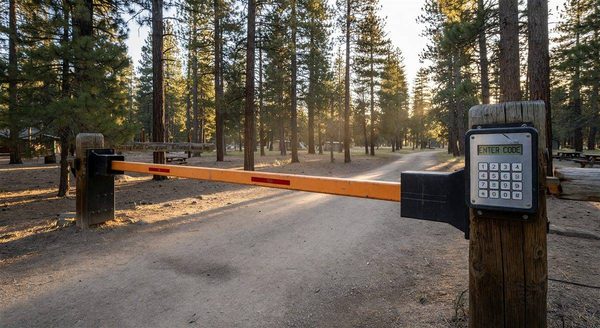
- What credential types do you need to support (PIN codes, RFID cards, smartphone app, QR codes, license plate recognition)?
- Do you need integration with your reservation management system?
- What’s your expectation for staff time savings from the new system?
- Do you need visitor management capability?
- Will you need multi-site management if you operate multiple properties?
5-year forward look:
- Are you planning property expansions that will add entry points?
- Do you anticipate significantly higher peak traffic as the campground grows?
- Are you likely to switch reservation management systems?
Writing down requirements before engaging vendors prevents the common outcome of buying a system optimized for someone else’s needs.
Step 2: Assess Your Physical Infrastructure
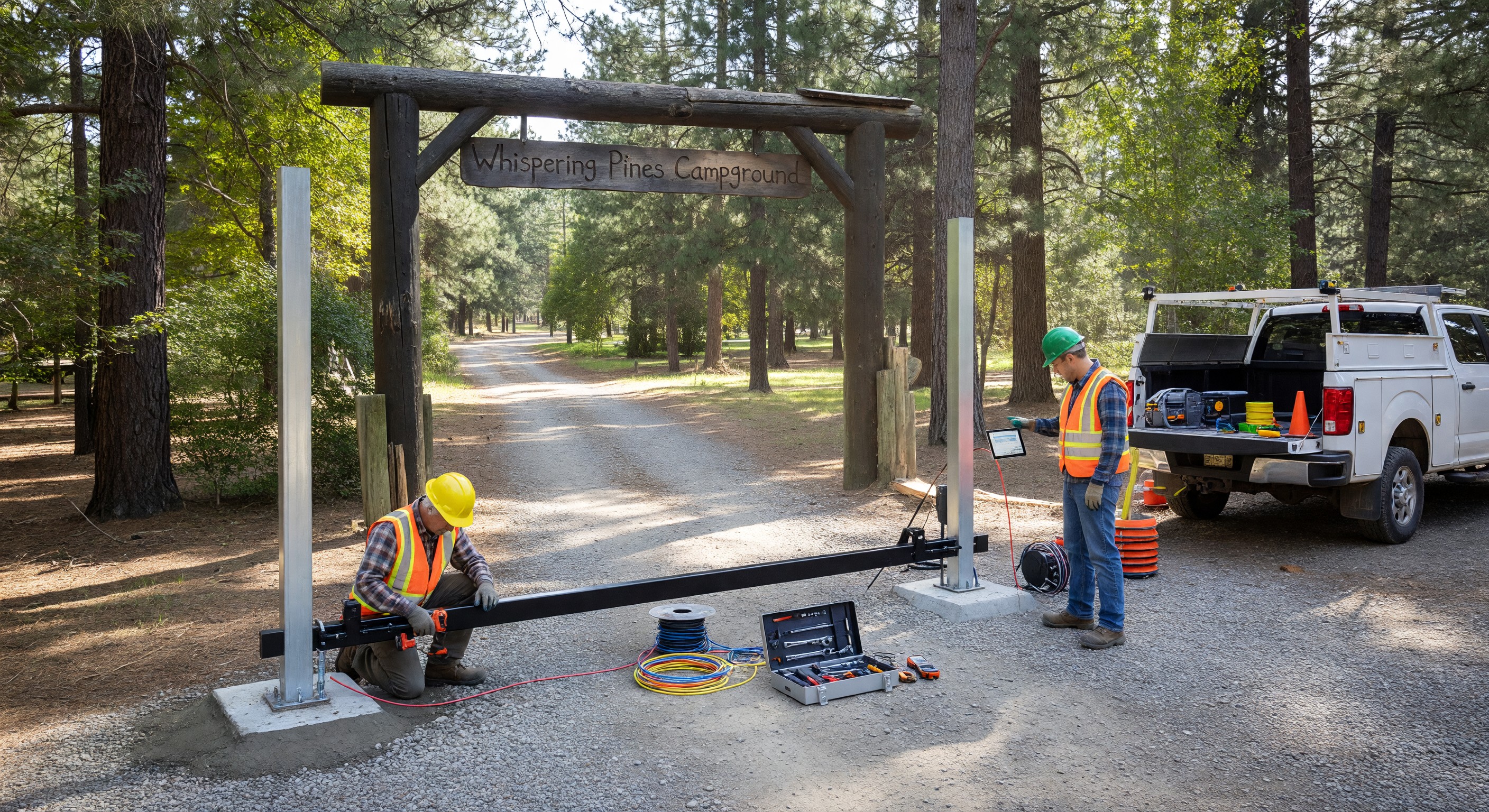
Gate system hardware requirements depend heavily on your site’s physical conditions. A site visit with an experienced gate installer — before you’ve committed to any specific product — is extremely valuable.
Infrastructure considerations:
- How wide are entry lanes? (Vehicle width determines gate arm length requirements; RV traffic requires wider clearances than passenger car lanes)
- What’s the lane geometry? (Tight turns, visibility obstructions, and proximity to the road affect equipment placement)
- What power is available at or near gate locations? (Existing power simplifies installation; new power runs can be a significant cost)
- What’s the soil condition? (Rocky or difficult soil increases installation cost for gate foundation work)
- What’s the wireless connectivity like at gate locations? (Affects which communication options are practical)
Commercial campground gate systems — including barrier arms that can accommodate RV traffic height and width — are designed for this application. Barrier gate systems capable of handling heavy commercial traffic are appropriate for high-volume campground entries where RVs, tow vehicles, and large trucks are regular visitors. Working with vendors experienced in campground applications, rather than those primarily serving parking or office building markets, typically results in better-suited equipment recommendations.
Step 3: Understand Integration Requirements
The gate system doesn’t operate in isolation. Its integration with other systems determines how much operational benefit it delivers.
Reservation management integration: This is typically the most important integration. If your reservation management system has a native integration with specific gate access control platforms, that’s a significant advantage. Custom integrations are possible but add cost and ongoing maintenance risk.
Document your current reservation system: Which platform are you using? What integrations does it support? Are there gate access control platforms it integrates with natively? Contact your RMS vendor directly to ask what gate system integrations they support before selecting gate hardware.
Security camera integration: If you have existing cameras or plan to add them, does the gate system’s management platform support camera integration for event-correlated video review?
Other access control points: If you have or plan amenity access control (pool, laundry, fitness center), can the same platform and credentials manage those points as well as the main gate?
Step 4: Define Your Budget Range
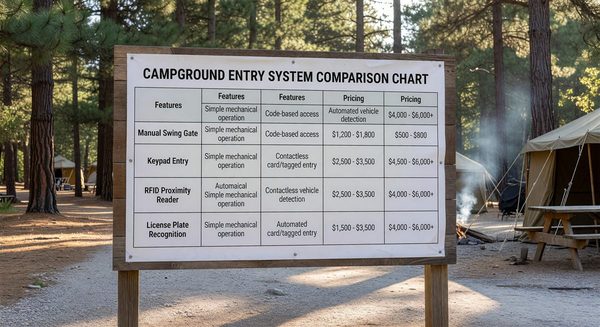
Gate system costs span a wide range depending on lane count, equipment quality, credential types, and integration complexity. Getting your budget range defined early — before vendor conversations — prevents wasting time on systems that don’t fit financially and helps vendors provide useful proposals.
Cost components to budget:
- Gate hardware (barrier arms, controllers, readers): $4,000–$15,000 per lane depending on equipment
- Intercom and camera hardware: $1,000–$5,000 per lane
- Electrical work for power supply: $500–$5,000+ depending on distance from existing service
- Foundation and civil work: $500–$3,000+ depending on soil conditions and lane preparation
- Software platform: $100–$500/month depending on features and location count
- Installation labor: $2,000–$8,000+ depending on project complexity
- Integration development (if custom): Variable, potentially $5,000–$20,000+
For a single-entrance campground with one entry/exit lane, total project cost commonly falls in the $15,000–$35,000 range for a quality installation with cloud management and reservation system integration. Projects with multiple lanes, difficult physical conditions, or complex integrations cost more.
Step 5: Evaluate Vendors and Get Proposals
With requirements documented, infrastructure assessed, integrations defined, and budget framed, you’re ready for productive vendor conversations.
Questions to ask every vendor:
- What campground-specific experience does your company have? Can you provide references from similar operations?
- Which reservation management platforms does your system integrate with natively?
- What happens when internet connectivity is lost? How does offline mode work?
- What’s your installation timeline from signed contract to operational system?
- What support is available for after-hours issues?
- What’s the maintenance history on your gate hardware — typical service intervals and common failure points?
- What’s the total cost of ownership over 5 years including hardware, software, and expected maintenance?
Get a minimum of three proposals to have a meaningful basis for comparison. Evaluate on total cost of ownership and integration quality, not just initial price.
Step 6: Plan the Transition
The period between decommissioning your old gate system and commissioning the new one is operationally sensitive. Plan the transition in detail before beginning installation.
Transition planning considerations:
- Can the new system be installed without taking the old one offline temporarily?
- What’s the plan if installation runs long and the gate needs to be operational for arriving guests?
- How will guests be notified of the new credential system and new procedures?
- What staff training is needed before go-live?
- What’s the plan for existing guests with multi-night reservations when the system changes mid-stay?
A parallel operation period — where the new system is installed and configured while the old system remains operational, with a defined cutover date — is the lowest-risk transition approach for busy campgrounds.
Frequently Asked Questions
How long does a gate system upgrade project typically take? From signed contract to operational system, 8–16 weeks is typical for straightforward projects. Projects requiring custom software integration, utility permits for new electrical service, or complex civil work can take longer. Starting planning well ahead of your target completion date — particularly if you want the new system operational before peak season — is essential.
Should I replace my entire gate system or upgrade components of the existing system? If your gate hardware is functioning reliably but your management software and integration capabilities are outdated, a controls and software upgrade without replacing mechanical components may be the right approach. If the hardware itself — motors, barrier arms, foundations — is at or past end of life, a full replacement is typically more economical long-term than maintaining aging hardware while upgrading the software layer.
What’s the most common installation mistake campground operators make? Underestimating the importance of reservation system integration and discovering after purchase that the gate system and reservation platform don’t communicate. The second most common mistake is installing equipment in lane positions that create traffic flow problems — inadequate stacking space before the gate, poor vehicle detection sensor placement, or visibility issues at the entrance. Both are preventable with thorough upfront planning.
Do I need separate entry and exit lanes? For campgrounds with high peak traffic — more than 50–75 vehicle movements per hour — separate entry and exit lanes significantly reduce congestion at peak periods. For most campgrounds, a single-lane configuration with bi-directional capability handles traffic adequately. If in doubt, design the lane area to accommodate future expansion to two lanes even if starting with one.
Further Reading from Authoritative Sources
- ARVC vendor resources and campground technology procurement guidance — ARVC’s member network and supplier directory gives campground operators access to vetted vendors and peer references — the exact resources needed when following the article’s recommendation to gather multiple competitive proposals and verify vendor experience with comparable campground operations.
- RV industry vehicle dimensions and campground infrastructure standards — RVIA publishes current RV size and weight data that campground operators need to properly specify gate arm lengths, lane widths, and height clearances for RV traffic.