If you’re evaluating campground entry systems in 2024, you’re entering a more mature market than existed even two or three years ago. The COVID-driven adoption of contactless technology accelerated vendor development, and there are now more purpose-built campground access solutions — plus better-adapted commercial access control systems — than ever before.
This buying guide outlines what to evaluate, what questions to ask vendors, and how to think through total cost of ownership before committing.
Start With Your Requirements
Before talking to any vendor, document your specific requirements:
Entry lane configuration: How many entry lanes do you have or plan to build? What’s your expected peak hourly vehicle throughput?
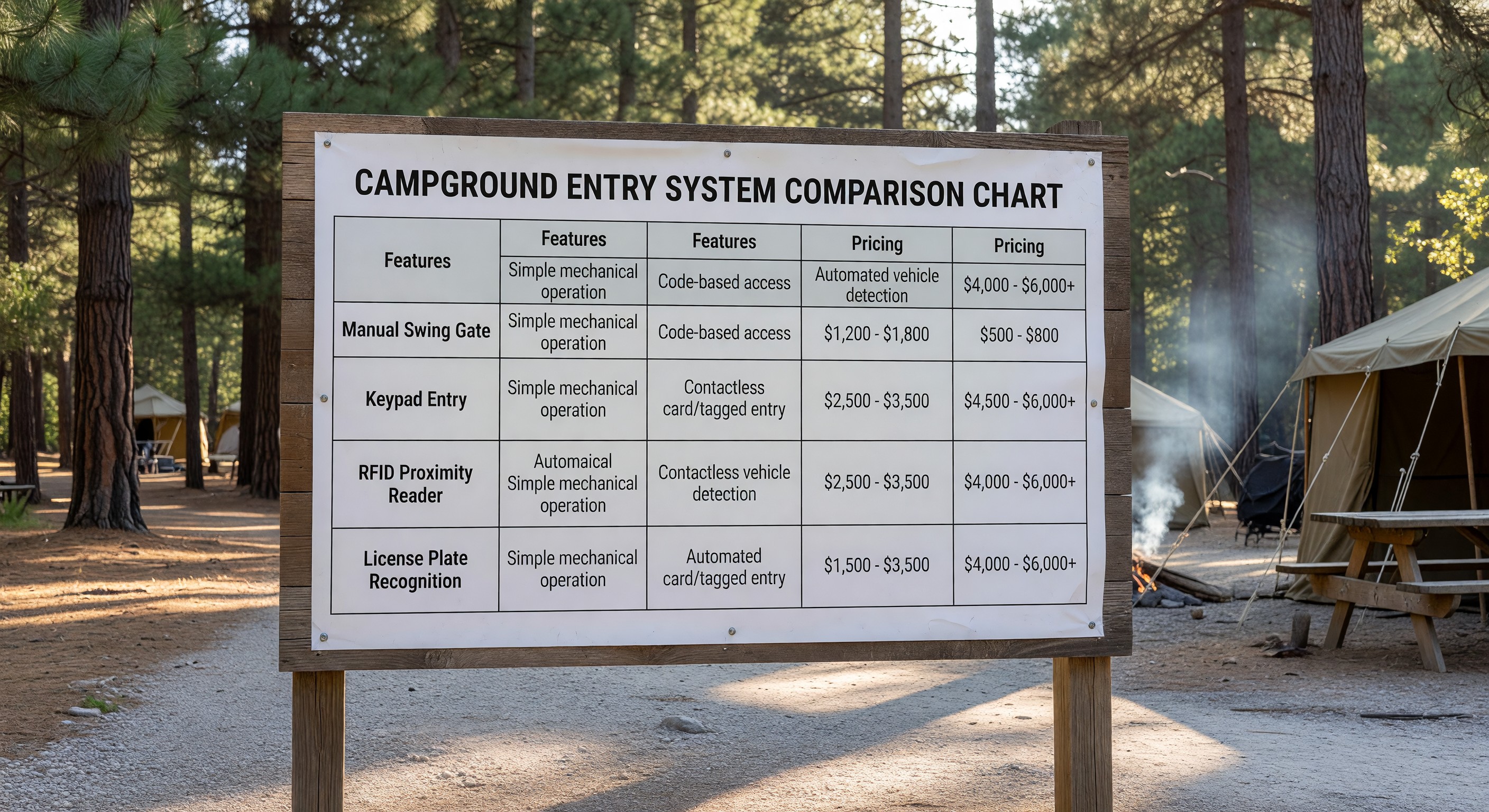
Credential preference: Do you prefer PIN codes (zero credential hardware cost), RFID cards or fobs (physical credentials), LPR (plate-based, frictionless), or a combination?
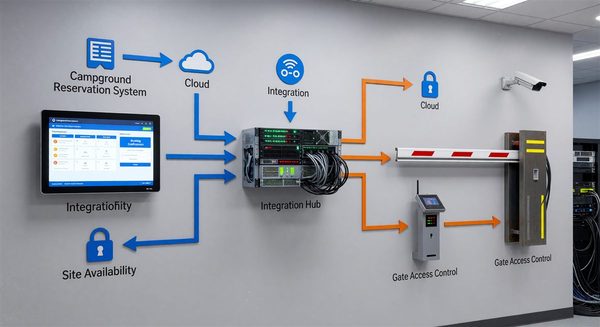
PMS integration need: Which reservation management system are you using, and do you need the gate system to integrate with it for automated credential management?
Number of access points: Beyond the main gate, how many secondary access points (pool, bathhouse, amenity building) need controlled access?
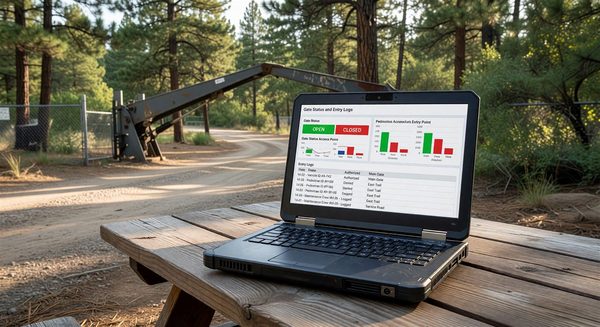
Remote management need: Do you need to manage gate credentials, view access logs, and control the gate from off-site via web browser or app?
Budget: What is your all-in budget for hardware, installation, first year of service, and software? Be specific — vendors will configure solutions to your budget.
The Main System Categories
Campground-specific access control platforms: A growing number of vendors have built access control specifically for the campground market, including reservation integration, guest credential automation, and campground operator interfaces. These are often cloud-based SaaS products that include both the software and compatible hardware.
Commercial access control with campground integration: Traditional commercial access control manufacturers (Honeywell, Bosch, Genetec, and others in the access control space) provide systems that campground-focused integrators have configured for the outdoor hospitality market. More complex to configure but often more flexible and scalable.
Barrier gate hardware with local controller: A simpler approach — a barrier gate with a standalone controller that manages PIN codes or RFID credentials locally without cloud connectivity. Lower cost but limited remote management capability and no PMS integration.
Hybrid approaches: Many parks use a commercial-grade barrier gate for the physical mechanism, a third-party access control system for credential management, and an integration layer to connect to their PMS.
Evaluating the Hardware
For the physical barrier gate mechanism, evaluate:
Cycle rating: Commercial gates are rated for a specific number of cycles before major service. A 2-million-cycle gate running 100 cycles/day will last 54 years theoretically. A gate rated for 500,000 cycles under the same conditions lasts 13 years. Match the rating to your expected usage.
Arm material and failure mode: Aluminum arms are standard; they’re light and durable but break cleanly on vehicle impact (by design). Higher-impact applications may warrant different configurations.
Weather performance: Gates operating in extreme cold, coastal salt air, or high humidity environments need weather-resistant construction and corrosion-resistant finishes.
Motor and gearbox: The drive mechanism should be commercial-grade with a service history that allows local technician servicing, not proprietary components requiring factory service.
Power and battery backup: Confirm battery backup cycle capacity and fail-safe configuration (should fail-open to allow exit during power failure).
For high-quality barrier gate hardware designed for high-cycle entry control environments, commercial barrier gate manufacturers produce systems built for commercial-grade access control applications that campground operators have adopted for entry lane management.
Total Cost of Ownership
The purchase price of the gate hardware is typically a minority of the five-year total cost. Build a complete TCO model:
| Cost Element | What to Confirm |
|---|---|
| Hardware | Gate, readers, controller, camera (if LPR) |
| Installation | Site prep, electrical, pavement loops, mounting |
| Software | One-time or annual subscription |
| PMS integration | Development cost if not native |
| Support | Annual support contract or per-incident rate |
| Maintenance | Parts, lubricants, technician annual service |
| Replacement parts | Barrier arms (budgeted annually for busy parks) |
A system with a lower hardware cost but expensive proprietary parts and mandatory annual service contracts may cost more over five years than a higher-upfront system with standard, readily-available components.
Frequently Asked Questions
Is it better to buy a campground-specific system or a general commercial access control system? Campground-specific systems offer easier PMS integration and campground-operator-oriented interfaces. Commercial systems offer more flexibility, wider hardware compatibility, and often more mature security features. The best choice depends on your specific PMS integration requirements and the sophistication of your access control needs.
How long does a campground gate installation typically take? A single-lane gate installation with no major site work takes 1–3 days. Projects requiring pavement cutting for loop installation, new electrical service, or concrete foundation work can extend to 5–10 days. Plan to be without a functional gate during installation — if this is operationally problematic, discuss phased installation with your contractor.
Should I get competitive bids for gate installation? Yes. Installation quality varies significantly between contractors, and price differences can be substantial. Require references and ask to see installations at comparable campgrounds. The cheapest bid may indicate inexperienced installation that creates maintenance problems.
What warranty should I expect on gate hardware? Commercial gate hardware typically carries a 1–3 year manufacturer warranty on parts. Extended warranties are often available for purchase. The labor warranty from the installer (guaranteeing their installation work) is separate and typically 90 days to 1 year. Clarify both before purchase.
Further Reading from Authoritative Sources
- ARVC technology and operations resources for campground operators — ARVC provides campground operators with procurement guidance, member resources, and technology standards that directly support the buying-guide framework described in this article.
- RVIA RV industry data and campground infrastructure planning — The RV Industry Association publishes data on RV dimensions, towing configurations, and usage patterns that directly inform campground gate lane design and arm length requirements.