Traditional campground gate access control systems were largely self-contained: a controller at the gate, codes programmed by staff at a physical keypad or PC on-site, and log records stored locally if at all. Managing these systems required physical presence — going to the gate controller to add or change codes, reviewing printed logs, or calling a technician to diagnose problems.
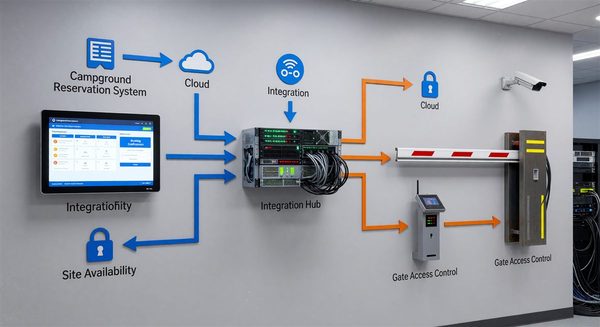
Cloud-managed access control platforms have fundamentally changed this model. The intelligence moves to a cloud server; the gate hardware becomes a well-connected endpoint. Operators manage access from any device, anywhere, and the system integrates with reservation software to automate what was previously manual work.
What Cloud-Managed Access Control Enables
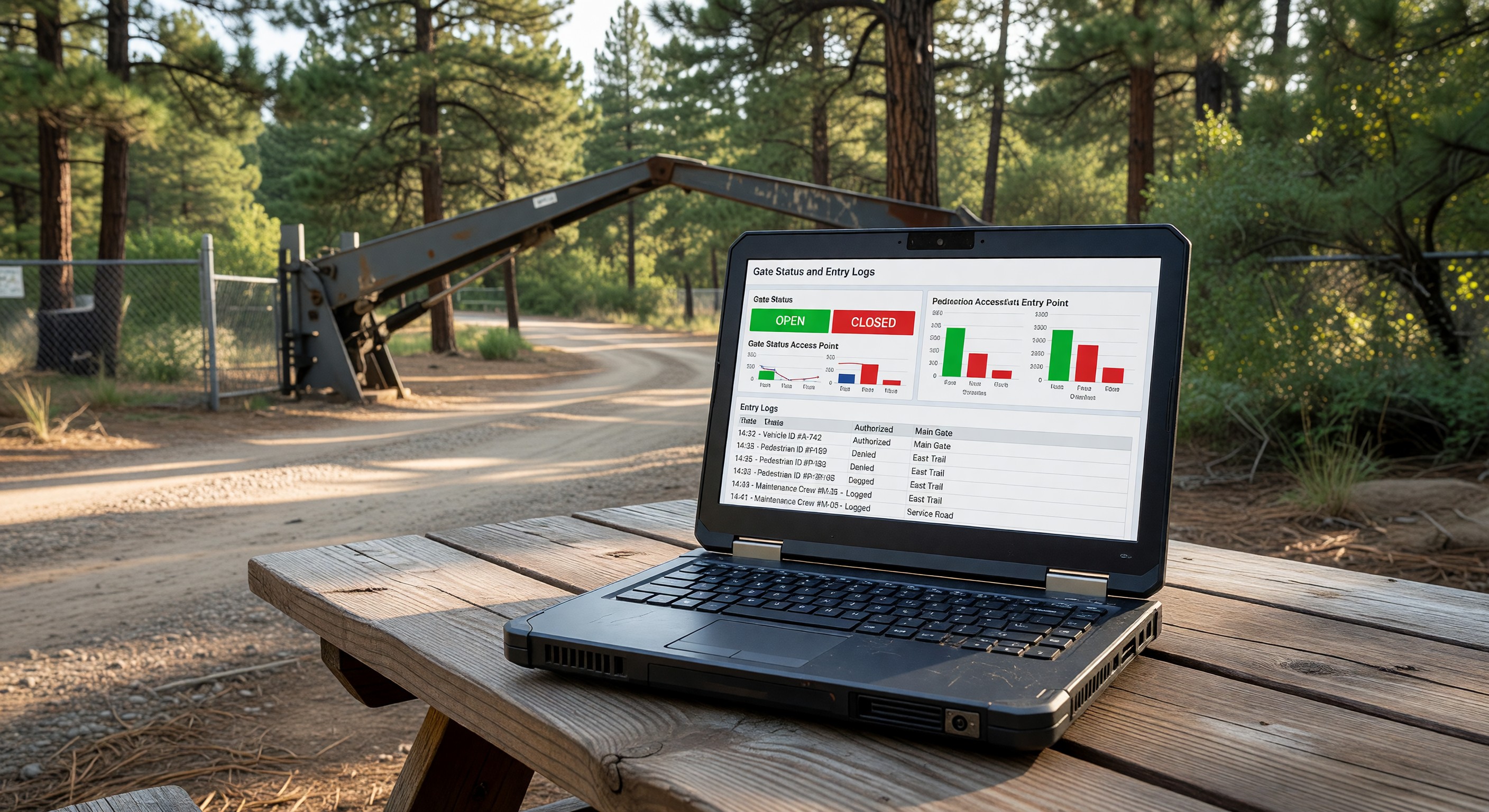
Remote management from any device: Add access codes, deactivate credentials, review entry logs, and check gate status from your smartphone whether you’re in the office, at home, or on another property. For operators managing multiple locations, this is transformative — no travel required to address access issues.
Real-time monitoring and alerts: See who is entering and exiting in real-time through the management portal. Set alerts for events that warrant attention: after-hours entry, failed access attempts, gate left open for extended periods, or a specific vehicle entering.
Automated credential issuance: Connect the access control system to your reservation management platform. When a guest books and pays, their access code is automatically generated and included in their confirmation email. When they check out, their code automatically expires. No staff time required for routine credential management.
Audit trails in the cloud: Entry and exit records stored in the cloud are accessible from any device, searchable across any date range, and retained regardless of whether the local gate controller experiences a failure. For security investigations, this cloud-stored audit trail is significantly more useful than paper logs or locally-stored records.
System health monitoring: Cloud platforms continuously monitor connectivity between the management system and the gate controller. If a controller goes offline, operators receive an alert — proactive notification rather than discovering the problem when a guest reports they can’t get in.
Integration with Reservation Management Systems
The most significant operational benefit of cloud access control for campgrounds is integration with reservation software. When properly integrated, the access control system becomes an automatic extension of the booking and check-in workflow:
- Guest books a reservation → access credential automatically created for stay dates
- Guest receives booking confirmation with access code (or instructions to download the access app)
- Guest arrives → gate access works on arrival day without office check-in stop
- Guest checks out → access credential automatically deactivates at checkout time
- Overstay scenario → access system flags gate controller to deny re-entry after checkout time
This automation eliminates a significant category of staff work: manually creating codes for each reservation, deactivating them after checkout, and fielding calls from guests who lost their code or had one that stopped working.
The integration also prevents revenue leakage. Without automated expiration, access codes often remain active after checkout — allowing former guests (or others they’ve shared codes with) to enter the property without a current reservation.
Multi-Site and Multi-Point Access Management
For campgrounds with multiple access points — main entrance, service entrance, pool area, bath facilities, laundry, boat launch — cloud access control allows all points to be managed from a single platform. Different credential types can grant different combinations of access:
- Registered guests: Main entrance + amenity areas based on reservation type
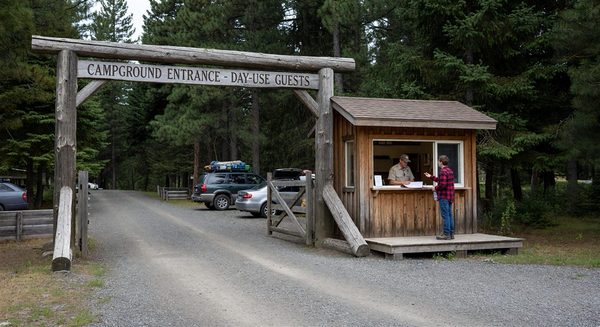
- Day-use visitors: Main entrance only, time-limited
- Long-term residents: Main entrance + service areas, no time limit
- Staff: All areas
Managing these permission sets through a cloud platform is orders of magnitude more efficient than maintaining separate codes for each gate. And when a credential needs to be revoked — a security concern, an unauthorized guest, or a non-payment situation — it can be deactivated across all access points instantly from one action in the management portal.
Offline Capability and System Resilience
A cloud-managed system that can’t function when internet connectivity drops is a significant operational risk for campgrounds, many of which are in areas with intermittent connectivity. Well-designed cloud access control systems operate in a hybrid mode:
- Normal operation: Credentials validated in real time against cloud database, entry logged to cloud immediately
- Offline mode: Gate controller operates from a locally-cached credential database, allows previously-validated credentials, logs entries locally and syncs to cloud when connectivity restores
This offline capability ensures guests aren’t locked out during network outages. The cached credential database has a limited synchronization window — typically 24–72 hours — so extended outages may require manual management. But for brief connectivity interruptions common in rural campground locations, offline mode maintains seamless operation.
Selecting a Cloud Access Control Platform
Key criteria when evaluating cloud access control platforms for campground applications:
Reservation system integration: Which campground management platforms does the access control system integrate with natively? Custom integrations are possible but add cost and ongoing maintenance burden. Native integrations with your existing reservation software are strongly preferred.
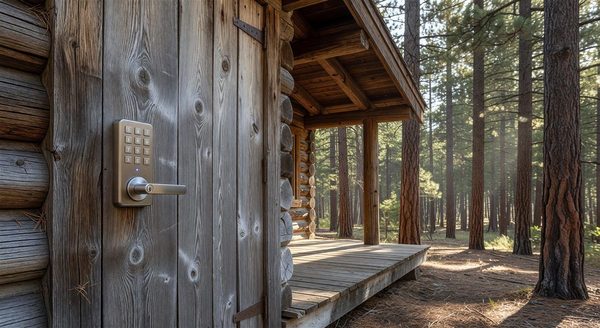
Credential types supported: Does the system support the credential formats your guests will use — numeric keypads (PIN codes), RFID cards, smartphone app, QR codes, license plate recognition? Guest-facing credential UX significantly affects satisfaction.
Hardware compatibility: Can the cloud platform manage your existing gate controller hardware, or does it require proprietary hardware? Platforms compatible with standard gate controller brands give you more flexibility.
Offline capability: What happens when internet connectivity drops? Understanding the offline behavior and its limitations is essential for rural campground operations.
Audit and reporting: Can you export access logs? What’s the retention period for historical records? Can you search by credential, time, or location?
Support and reliability: What’s the platform’s uptime track record? What support is available when issues arise during off-hours — the times when campground access problems are most disruptive?
Frequently Asked Questions
How does cloud access control handle power outages at the gate? Gate controllers typically have battery backup capable of maintaining operation for several hours during power outages. Some installations include uninterruptible power supplies (UPS) for longer backup duration. If the gate controller loses power entirely, most designs default to either locked-open (preferred for emergency egress) or locked-closed depending on configuration. This is an important safety and security tradeoff to discuss with your installer.
Can guests manage their visitor access through a cloud system? Some cloud access control platforms include a guest-facing portal or app where registered guests can generate visitor passes — QR codes or temporary PIN codes — for their guests. These visitor credentials are automatically limited to the registered guest’s stay dates and can be set to expire at any time. This capability reduces front-desk workload while giving guests convenient control over their visitor list.
What’s the typical cost of a cloud access control system for a campground? Hardware costs vary by gate type and installation complexity but generally run $3,000–$12,000 per gate point for the controller and associated hardware. Cloud platform software subscriptions typically run $100–$400/month depending on the number of access points and credential volume. Total first-year costs for a single-entry campground are commonly $5,000–$15,000, with ongoing software subscription costs thereafter.
Is my guest data secure in a cloud access control system? Reputable cloud access control platforms follow standard enterprise security practices: encrypted data transmission and storage, role-based user access controls, multi-factor authentication options, and compliance with applicable privacy regulations. Review the vendor’s security documentation and data processing agreements, particularly if your jurisdiction has strict privacy requirements around guest data.
Further Reading from Authoritative Sources
- ARVC campground security and technology resources — ARVC is the leading trade organization for campground operators and provides operational guidance on technology adoption relevant to remote management scenarios described in this article.
- Access control systems and cloud architecture overview — Wikipedia’s access control article provides foundational definitions of on-premise versus cloud-based access architectures, supporting readers who need background context on the technology category before evaluating campground-specific options.