The majority of campground security incidents — unauthorized entry, noise violations, vandalism, theft — happen between 10pm and 6am, when your office is closed and most staff have gone home. Building effective after-hours security protocols doesn’t necessarily mean hiring overnight security staff (though some parks do). It means using technology intelligently and establishing clear systems for detection and response.
The After-Hours Security Stack
Effective after-hours security typically combines several elements:
Physical access control: Gates and perimeter barriers that prevent unauthorized vehicle entry after check-in hours close.
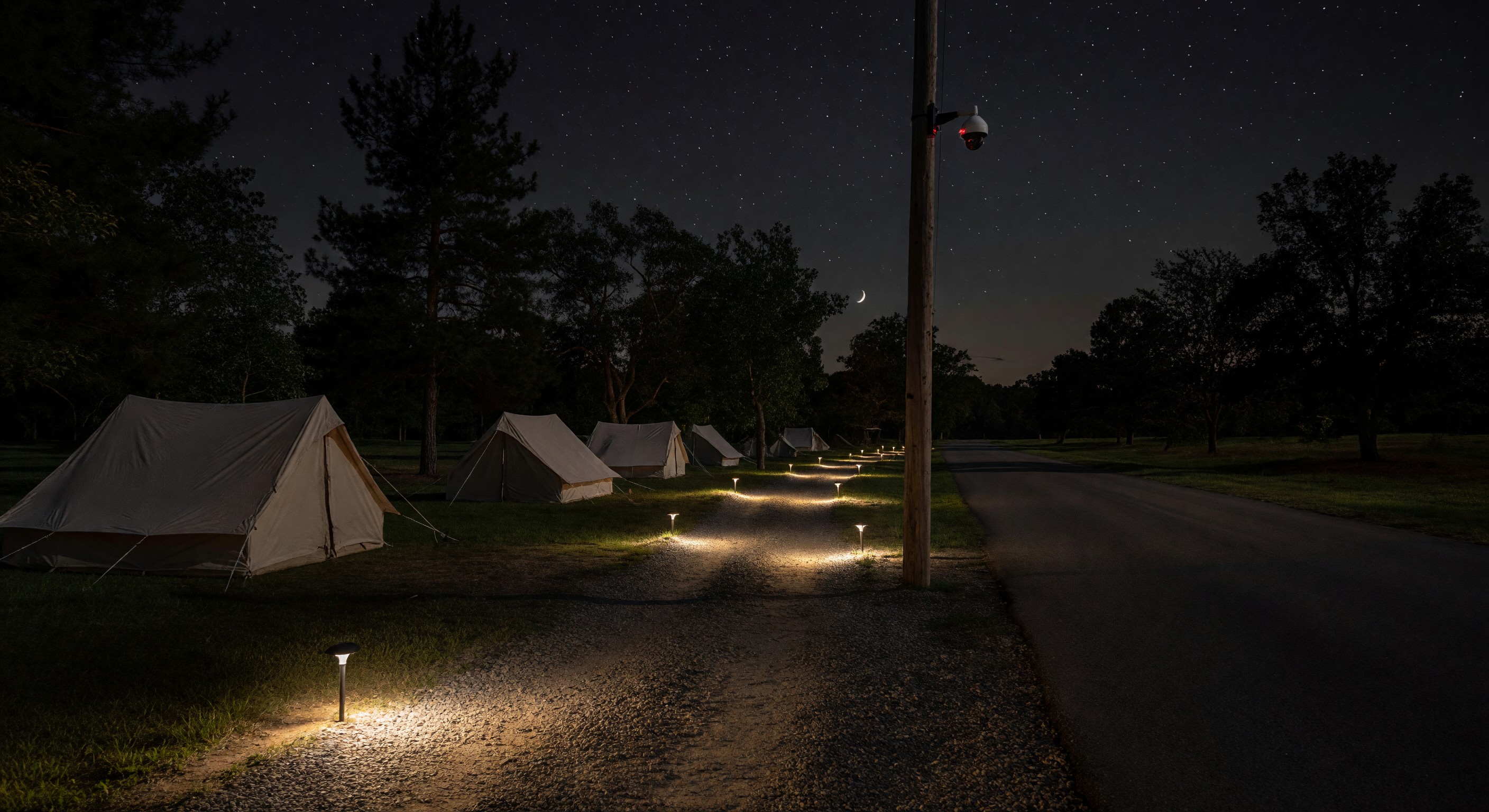
Surveillance cameras: Video monitoring that creates a deterrent and documentation record.
Alerting systems: Technology that detects anomalies and notifies the right person to respond.
A defined response protocol: Clear instructions for who responds to what, and how.
Guest communication tools: A way for registered guests to reach someone if they have an issue at 2am.
No single element replaces the others. A camera system with no response protocol doesn’t solve problems. A locked gate with no camera doesn’t document who climbs over it.
After-Hours Gate Configuration
Gates should be configured differently during after-hours periods than during standard operation:
Registered guests can still enter and exit: Guests who are staying at your park should be able to return after a late dinner without calling anyone. Configure your access control system to allow registered guest credentials to function 24/7 during their reservation dates.
Exit should always be possible: A gate that traps guests inside is both a safety hazard and a legal liability. Configure exit loops or exit push buttons to allow free exit at any time.
No walk-in or unregistered access: After a defined cut-off time (10pm is common), remove any “open” mode that might allow non-credentialed vehicles through. Code-based or credential-required entry is the only access mode.
Logging is active: All gate activity during after-hours should be logged with timestamps. If an incident occurs, the access log is often key evidence.
Video Monitoring Without 24/7 Staff
Round-the-clock video monitoring by a human operator is expensive and often impractical for smaller parks. Technology alternatives:
Motion-triggered alerts: Configure security cameras to send push notifications or emails when motion is detected in defined zones (along the fence line, at secondary access points, in the boat storage area). Staff on call receive alerts and can view live footage remotely.
AI-powered anomaly detection: More advanced camera systems can distinguish vehicles from wildlife, flag vehicles present after hours in staff-only areas, or detect fence climbing. These reduce alert fatigue from standard motion detection (which triggers on any movement including wildlife).
Remote video monitoring services: Third-party monitoring services employ humans who watch camera feeds and call your on-call staff (or local police) when they observe incidents. This provides human oversight at a fraction of the cost of an on-site guard. Monthly costs typically run $100–$400 for standard campground configurations.
The On-Call Protocol
Someone needs to be reachable after hours for:
- Registered guests who have problems (code doesn’t work, emergency situation)
- Security alerts from monitoring systems
- Local law enforcement contact if an incident triggers a police response
Define:
Who is on call: A rotating schedule if you have multiple staff. Seasonal operators may need to plan for this differently than year-round parks.
What the on-call person can do remotely: Can they unlock the gate remotely? Can they view cameras from their phone? Can they authorize a guest credential remotely if needed?
When to call law enforcement vs. handle internally: A noise complaint from guests is handled internally; an active intrusion observed on camera calls for police contact before personal confrontation.
Document this protocol and post it for staff. The 2am gate emergency should be handled from a written playbook, not improvised.
Guest Safety Communication After Hours
Guests who experience an emergency — medical issue, security concern, equipment failure — should know how to reach help after hours.
Park information packet: Include after-hours contact information prominently. A laminated card in or near the site, or a note in the pre-arrival email, ensures guests have this before they need it.
Posted signage: Emergency contact numbers posted at bathhouses, pavilions, and the gate kiosk ensure guests can reach help without having to search.
Two-way radio for ranger patrols: If a staff member conducts any kind of evening rounds, a radio system allows them to communicate without relying on cellular coverage.
Frequently Asked Questions
Should I do security rounds at night? It depends on your park’s specific risk profile. Parks with frequent unauthorized access, a history of incidents, or high-value assets (marina, resort amenities) benefit from regular evening security rounds. Parks with consistent security records and good access control systems may not need nightly rounds.
Do I need to hire licensed security guards for after-hours monitoring? For most campgrounds, no. Licensed security requirements vary by state for guard activities — if you’re employing someone to make physical interventions, check your state’s requirements. Remote monitoring, on-call response, and regular maintenance rounds are typically not activities that require a licensed security guard.
What’s the most common after-hours security incident at campgrounds? Unauthorized entry by non-guests — either following registered guests through the gate, entering via perimeter gaps, or simply walking in through areas without physical barriers — is the most common. Noise violations from registered guests are a close second.
How do I handle a registered guest who is creating a disturbance after hours? Attempt a phone contact first. If the disturbance doesn’t stop after a phone contact, a park staff member may need to address it in person or call law enforcement if the situation warrants it. Having a documented guest conduct policy that guests acknowledged at booking supports your authority to address violations and, in extreme cases, to require guests to leave.
Further Reading from Authoritative Sources
- ARVC campground safety and security operations resources — ARVC publishes operational guidance and connects campground operators with industry-standard safety practices.
- OSHA workplace safety standards for hospitality security personnel — OSHA sets workplace safety standards that apply to campground security staff, including requirements around hazard communication and emergency response procedures.